hold.that.thought. Blog
Trade Show Booth Centerpieces: A Custom Fabrication Planning Guide
By Hollywood 3D Printing ·
Key Takeaways
- For complex booth builds, contact your fabrication partner 6 to 8 weeks before the show; rush is available at a premium.
- Centerpieces that draw aisle traffic include oversized product replicas, dimensional logos, mascot sculptures, pedestals and cutaway models.
- Pieces are engineered for modular breakdown with labeled components, internal armatures and hardware, so no tech crew is needed for setup.
- Each piece is test-fit and photographed in the studio, crated to size, and shipped to the venue, exhibit warehouse or booth contractor on the general services contractor's deadline.
- Durable clear coats and Pantone matching help a piece survive repeated setup and breakdown and look right under show lighting.
Contact your fabrication partner 6 to 8 weeks before the show for a complex booth centerpiece, and earlier if the piece needs chrome or gold plating or has to ship to an advance warehouse. That window covers design approval, fabrication, finishing, a test assembly and crating. Rush builds are possible at a premium, but the calendar is set by your show’s deadlines, not ours, so work backward from the date the piece has to be at the venue.
This guide is for in-house exhibit managers, exhibit design and build firms, and agencies that need a hero piece a standard booth package does not include. We are a Los Angeles fabrication studio, and pieces we build for booths are engineered to ship, set up and break down without a technical crew.
What kinds of centerpieces stop traffic on a show floor?
The pieces that work are simple to read from the aisle and interesting up close. These are the types we build most often for booths and brand spaces:
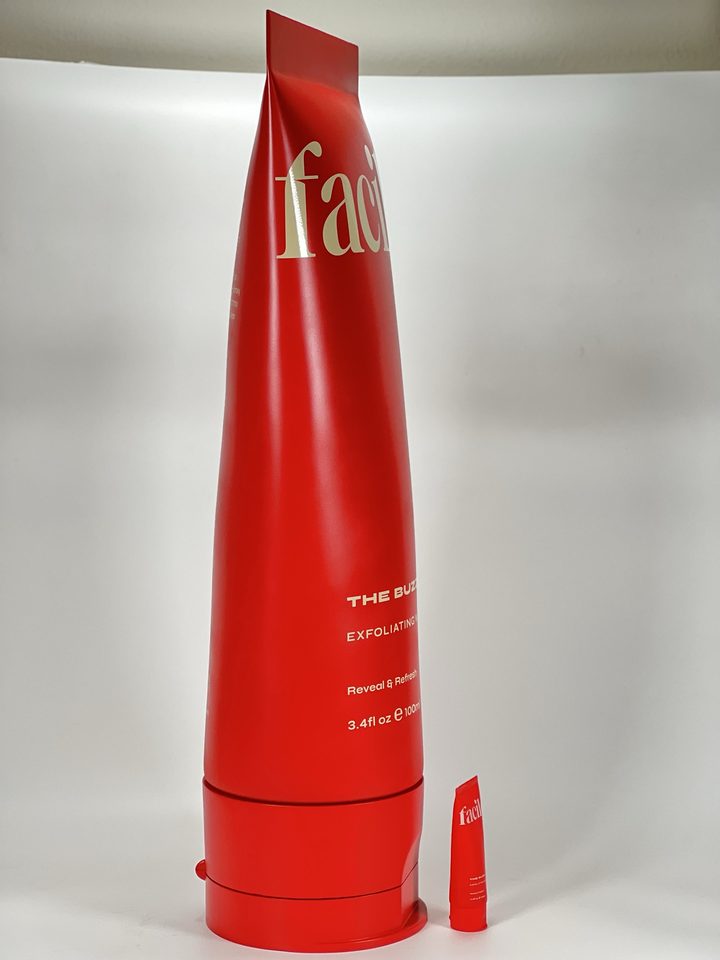
- Oversized product replicas. Your product at 2 to 15 times actual size. See our guide to oversized product replicas for how they are made.
- Dimensional logos and wordmarks. Raised lettering and emblems in Pantone-matched paint, or chrome and gold finishes for a mirror look.
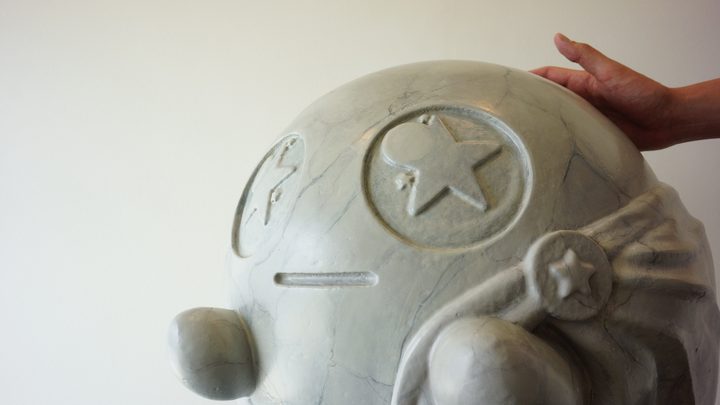
- Mascot and character sculptures. Sculpted from 3D files, reference images or hand-sculpted foam.
- Pedestals and display stands. Finished as marble, stone or wood-grain when the concept calls for it.
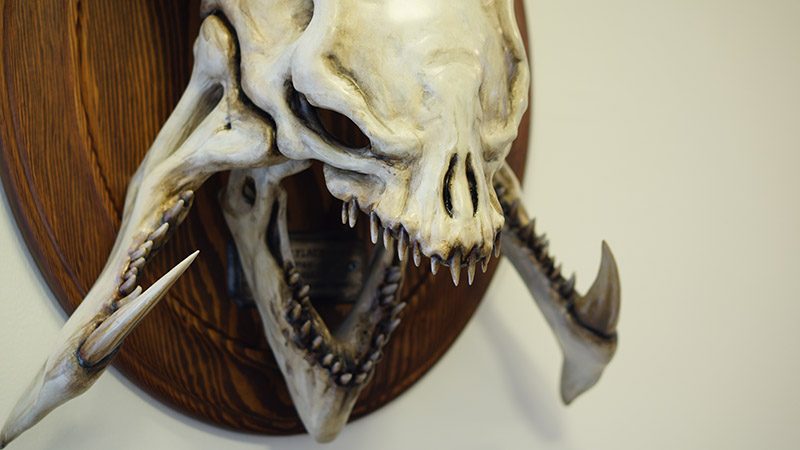
- Cutaway and exploded-view models. Products or equipment shown with the housing open, or parts separated to show how they fit. These suit technical products that are hard to explain in one glance.
- Scale models of products, buildings or sites. See scale models for that side of our work.
How does a fabricated centerpiece fit with an exhibit house’s work?
Exhibit houses build structure, graphics, lighting and flooring well. What they usually do not have in-house is a shop for sculptural and object work: milled foam, printed parts, plated finishes and precise paint matching. We work as that specialist. You send the booth footprint, sightlines and the piece’s job in the design, and we deliver a finished, crated object that drops into your booth on install day.
Coordination is straightforward. We ship to the venue, your exhibit warehouse or your booth contractor, and we match your general services contractor’s advance-warehouse or direct-to-show deadlines. It helps to share the freight instructions and show-site drayage details early, so crate dimensions and labeling match what the contractor expects. If you want a wider look at how we work with businesses like yours, see our trade show displays page.
When should I order a booth centerpiece?
For complex builds, we recommend contacting us 6 to 8 weeks before the show. The time goes into these stages, which we use to work backward from your date:
| Stage | Typical time | Notes |
|---|---|---|
| Design and renderings | 3 to 5 business days for renderings and finish samples | Approval of scale, color and finish before any fabrication |
| First article or prototype | 2 to 4 weeks | Standard for anything complex or in multiples |
| Chrome or gold plating | Adds about 2 weeks | Parts must be SLA resin sanded to 1000-grit |
| Simple painted pieces | Often quicker; foam single parts take 2 to 4 days after production begins | Quotes include lead time for the specific job |
| Test assembly, photos, crating | Built into the schedule | We assemble and photograph in the studio before packing |
| Freight to warehouse or venue | Set by the contractor’s deadline | Advance-warehouse deadlines arrive earlier than show-floor dates |
A typical project runs 2 to 6 weeks in total, but freight deadlines and approval delays usually decide whether the last week is calm or frantic. The safest way to protect your date is to lock the design early. More on the details is in custom fabrication lead times.
What planning mistakes lose the most time?
Most schedule problems on booth pieces come from the same few places, and all of them are avoidable:
- Changing artwork after approval. A late logo or color change restarts finishing, and can restart fabrication.
- Ignoring the load-in path. A piece that fits the booth but not the freight door or elevator forces a redesign into more sections.
- Confusing the show date with the freight date. If your route runs through an advance warehouse, the working deadline is earlier.
- Leaving weight and mounting for last. Hanging or wall-mounted pieces need to be designed around the rigging or mounting plan from the start.
- Skipping the sign-off on color. Approving on a phone screen is not the same as approving a physical finish sample.
None of this is unusual, and a short call at the start of a project usually catches most of it.
How are centerpieces engineered for setup and teardown?
A piece that looks perfect in the studio can be a nightmare at install if nobody thought about how it comes apart. We design for the people who will actually set it up:
- Modular breakdown. Large pieces are built in sections that fit through freight doors and into standard crates.
- Labeled components. Each section is marked so assembly order is obvious.
- Internal armatures and hardware. Structure is inside the piece, so joints stay tight across repeated setups.
- Assembly instructions included, with phone support on install day. No tech crew is needed.
- Test-fit in our studio. Each piece is assembled and photographed before it is packed, so surprises happen here and not on the show floor.
What finishes survive a whole show season?
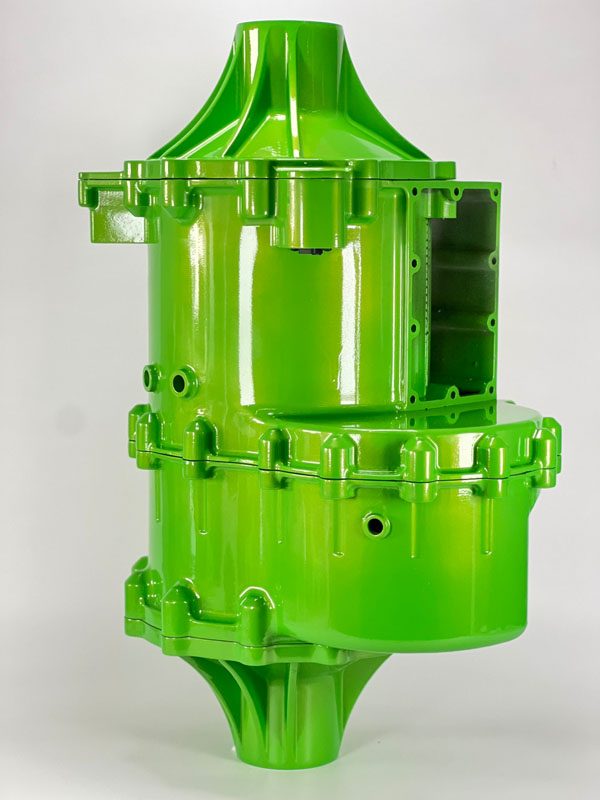
Trade show pieces get packed, unpacked, touched and rolled across concrete, sometimes several times a year. Finish choice is part of the engineering. All parts are fully sanded before paint. Foam pieces get a polyurea epoxy hard coat, about 1/16" thick, sanded smooth. Then we finish with durable clear coats, and painted parts are not released until fully dry and cured.
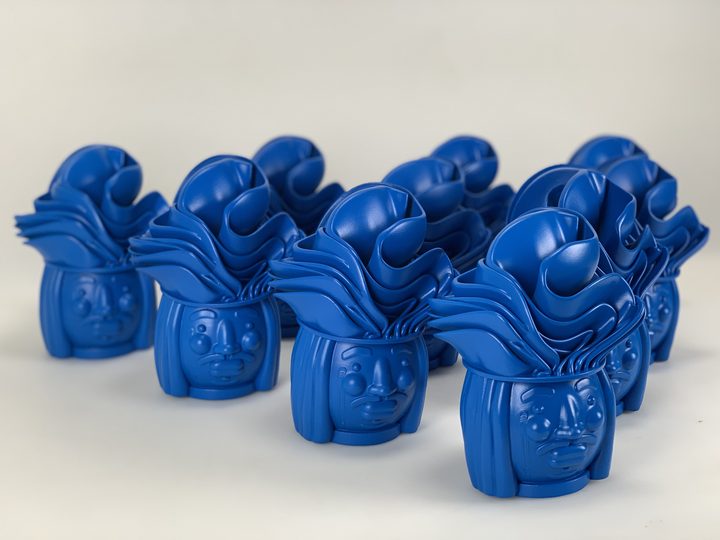
Color matters more than most teams expect on a show floor, where booths sit under mixed lighting and next to competitors. We match Pantone from a swatch or code, test under multiple lighting conditions, and keep the mix formula so a repeat piece matches. Details on the process are in our Pantone matching guide. For mirror finishes on logos or accents, real chrome or gold plating is also available (see plating for 3D printed parts), with foam-lined custom packaging so plated pieces are protected in transit.
Which centerpiece is right for my booth?
The right piece depends on what the booth has to do. Match the object to the job, not to what looked good at the last show.
If the goal is to make a product recognizable from the aisle
Use an oversized replica. It works best for consumer products whose shape is already familiar. Keep the color exact and the surface clean, because a large flat area shows every flaw. The scale is usually set by the booth height limit rather than by the design.
If the goal is to make the brand name visible
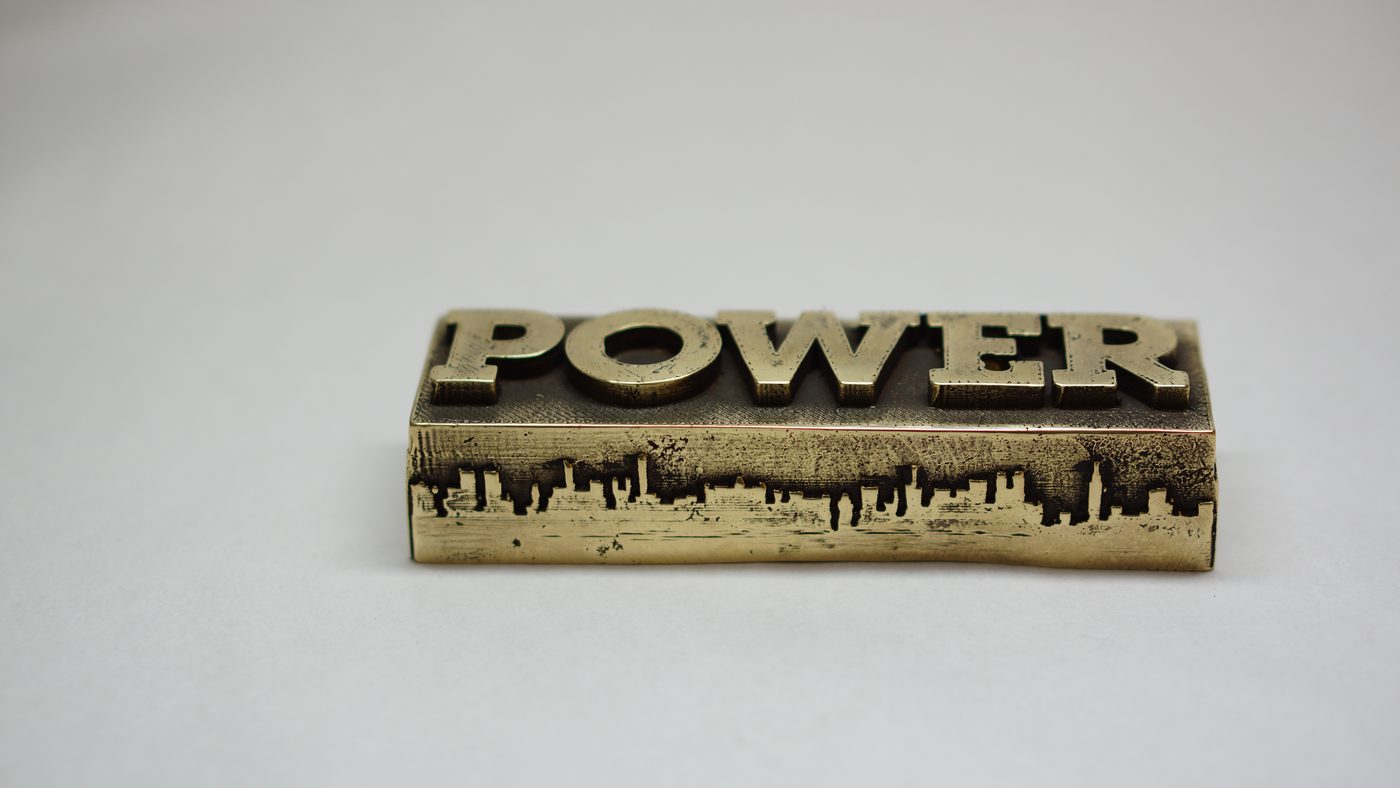
Use a dimensional logo or wordmark. Raised lettering picks up light and shadow in ways a flat graphic cannot, and a chrome or gold finish adds a mirror-like accent that draws the eye. Send vector artwork and the Pantone values, and we will confirm whether the letters should be printed, milled or built in sections.
If the goal is to explain how something works
Use a cutaway or exploded-view model. Opening the housing or separating the parts lets visitors see inside without a demo unit, and paint can differentiate components. These models are typically built at a table-top scale, so they suit a demo counter more than the front of the booth.
How are booth pieces crated and shipped?
We build protective shipping crates sized to each piece. Large pieces travel in labeled sections and are packed efficiently for freight. Delivery goes where your plan says: the exhibit warehouse, the general services contractor’s advance warehouse, directly to the show site, or to your booth contractor. Local pickup and same-day local delivery in Los Angeles are available, and we ship nationwide and internationally.
Which route is right depends on the show’s rules. Advance-warehouse shipping means the piece has to be finished earlier than a direct-to-show delivery would require, while direct-to-show gives more build time but leaves less room for freight problems. Your show kit sets the actual dates. More on shipping large pieces is in engineering oversized pieces to ship and assemble.
What should I include in the request?
- Show dates and the freight deadline for your route (advance warehouse or direct-to-show).
- Booth footprint, sightlines, ceiling or hanging-height limits and a plan or rendering, if available.
- What the piece is: product files, logo vectors, packaging art or reference photos.
- Target size, weight limits and who will do the install.
- Brand colors, finishes and any chrome or gold accents.
- Quantity, including duplicate pieces for a second show, and whether you need an NDA.
More on writing a quotable request is in what to include in a custom fabrication quote request. We focus on commercial projects, with no minimum quantity. See custom fabrication lead times for how size, method and finish affect the schedule, and the custom fabrication page for our full range of methods.
Send us your show dates, booth plan and references, and we will confirm a build schedule that works back from your freight deadline.
Request a QuoteFrequently Asked Questions
How far in advance should I order a custom trade show display piece?
For complex builds we recommend contacting us 6 to 8 weeks before the show. That covers design approval, fabrication, finishing, test assembly and crating. Chrome or gold plating adds about 2 weeks. Rush builds are possible at a premium, but freight deadlines from your general services contractor may be earlier than the show date.
Can you build an oversized product replica for a trade show booth?
Yes. We build oversized product replicas at 2 to 15 times actual size, with assembled pieces up to 15+ feet. Large pieces are made in sections with internal armatures, finished with Pantone-matched paint and durable clear coats, and crated for shipping to the show or an exhibit warehouse.
Do you work with exhibit houses and design-build firms?
Yes. We supply sculptural and object pieces such as replicas, dimensional logos and mascots that exhibit builders do not usually make in-house. We ship to the venue, your exhibit warehouse or your booth contractor, and coordinate with the general services contractor's advance-warehouse or direct-to-show deadlines.
Will we need a technical crew to set up the piece?
No. Pieces are engineered for modular breakdown with labeled components, internal armatures and hardware, and they ship with assembly instructions. We also offer phone support on install day. Each piece is test-fit and photographed in our studio before it is packed.
Can a booth centerpiece be reused at multiple shows?
Yes, if it is built for it. Pieces must survive repeated setup and breakdown, so we use durable clear coats, hard-coated foam, internal structure and crates sized to each piece. Tell us how many shows are planned, and we can keep the paint formula on file for touch-ups or a matching second piece.
What do I need to send to get a quote for a booth piece?
Send show dates and your freight deadline, booth footprint and height limits, product files or reference images, target size, brand colors and finish notes, quantity and whether you need an NDA. No 3D file is required; a sketch with dimensions and reference images is enough to start.
Have a project in mind?
Hollywood 3D Printing designs, fabricates, and finishes custom pieces for brands, agencies, productions, and events, all under one roof in Los Angeles. Tell us what you’re building and when you need it.
Start Your Project TodayPrefer to talk it through? Call (323) 645-7640.
Related Reading