hold.that.thought. Blog
What to Include in a Custom Fabrication Quote Request
By Hollywood 3D Printing ·
Key Takeaways
- Tell the fabricator what the piece is, where it will be used, the arrival date and whether that date is fixed.
- A sketch, dimensions and reference images are enough to start if you have no CAD file; STL, OBJ and STEP files speed things up.
- Finish expectations matter for timing: metallic paint adds 2–3 days, while chrome or gold electroplating adds about 2 weeks.
- Share your shipping destinations, NDA needs and who approves the design.
- After you submit, we typically respond within 24–48 business hours, review scope on a call, and send a plan and renderings for approval.
To get an accurate custom fabrication quote quickly, tell the fabricator what the piece is, where it will be used, the date it must arrive, how many you need, its approximate size, and what reference material you have (images, sketches or CAD files). Add finish expectations, handling needs, shipping destinations and any NDA needs. If you have no files at all, a sketch, dimensions and reference images are enough for us to start.
Every missing detail is a question we have to ask before we can quote the work, and each round of questions adds days. This checklist covers what we look for when a request comes in through our quote form, why each item matters, and what happens after you submit.
What information does a fabricator need for a quote?
Here is the full checklist. You do not need every item to request a quote, but the more you can answer, the tighter the first estimate will be.
- What it is and where it will be used. An event, a shoot, a retail display, a ceremony, a trade show booth.
- The date it must arrive, and whether it is a hard date.
- Quantity. One piece is fine; there is no minimum quantity.
- Approximate size or scale, and viewing distance.
- Reference material. Images, sketches, CAD files.
- Brand assets. Vector logos, Pantone codes, swatches.
- Finish expectations.
- Handling and durability needs.
- Packaging and shipping destinations.
- NDA requirements.
- Decision-makers and approval turnaround.
Why do use and deadline matter so much?
The use tells us how the piece will be built. A hero prop that appears on camera for a day is engineered differently from a display touched by the public for weeks. The deadline tells us whether the standard schedule works or whether the project needs rush production, which is available at a premium.
Say plainly whether the date is hard. A trade show load-in or a broadcast date cannot move; a soft internal target can. If you are unsure how much time to allow, our post on custom fabrication lead times lays out the stages. As a rule of thumb, our typical projects run 2–6 weeks in total, and for complex trade show builds we recommend contacting us 6–8 weeks before the show.
How should you describe size and viewing distance?
Give the approximate dimensions, or the scale relative to the real object (for example, twice life size), plus where the piece will be seen from. Something read through a camera lens, held at arm’s length, or viewed across a convention floor needs different levels of detail, and detail is a major driver of schedule and process. Size also determines whether the piece is one part or built in sections, and how it ships. We fabricate pieces up to about 10–15 ft assembled, and oversized replicas at 2–15x actual size.
What reference files and images should you send?
If you already have a 3D file, send it in STL, OBJ or STEP format; IGES also works. Our post on CAD file formats explains the differences.
If you do not have a file, that is common, and it is not a barrier. Our 3D design service builds models from a sketch, dimensions and reference images, and we can also do digital sculpting, product and CAD design, reverse engineering and renderings. For the process, see how to 3D print from a sketch, drawing or image. A useful set of references includes:
- Photos of the real object from several angles, with something for scale
- Concept art, storyboards or mood boards
- Dimensioned sketches, even rough ones
- Photos of anything with the finish you want
If the piece is a physical object you own, tell us. We offer 3D scanning, which can capture it directly. The client owns the designs we create for them.
What brand assets and finish details help?
Send vector logo files (not screenshots), Pantone codes if you have them, or a physical swatch. We can match color from a swatch or code and test it under multiple lighting conditions; the mix formula is kept for repeat orders. For lettering and logos, die-cut vinyl decals are an option. Our guide to painting and finishing covers what is possible.
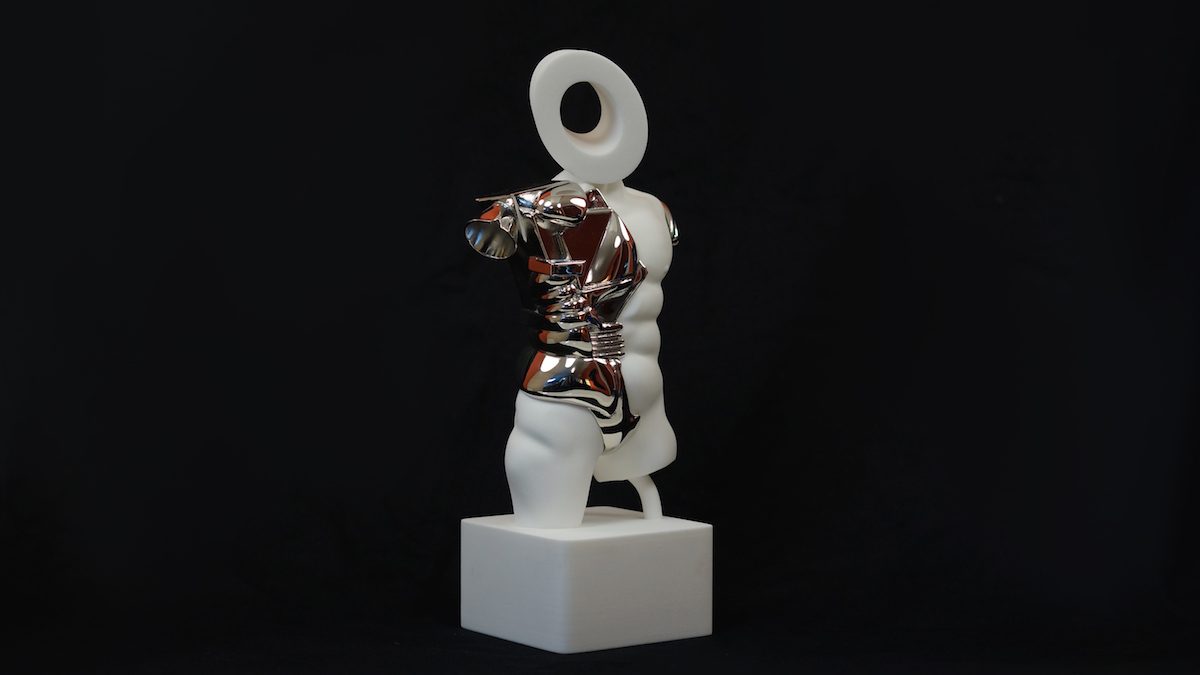
Say what you expect the surface to look like: matte, high gloss, textured, marble or wood effect, or metal. The metal question matters most for time. Metallic paint adds only 2–3 days, while chrome or gold electroplating adds about 2 weeks. If you want real plated metal, mention it; if metallic paint would satisfy the brief, mention that too. Reference photos of the finish remove guesswork.
What handling, shipping and confidentiality details are needed?
- Handling. Will the public touch it? Will it be shipped repeatedly to multiple events? Will it be outdoors? Each of these affects construction and coatings, and outdoor use in particular is something we would want to discuss before promising anything.
- Destinations. One address or many? A venue, a warehouse, a production office? We offer local pickup or same-day local delivery in LA and ship nationwide and internationally.
- Confidentiality. NDA management is standard here. Say up front if the project involves an unreleased product.
Who approves the design?
Tell us who approves the design and how quickly they respond, because slow approvals are a common cause of missed dates. Also mention anyone who needs to see a proof and whether an NDA is needed before you share files. We focus on commercial and production projects, with no minimum quantity, and our custom fabrication lead times guide explains what drives the schedule.
Weak brief vs. strong brief
| Weak brief | Strong brief | |
|---|---|---|
| What and where | We need a big product for an event. | Oversized replica of our new product for a two-day consumer pop-up, viewed from 10–20 ft. |
| Timing | ASAP. | Must be on site by the 14th; load-in is a hard date. Design approval within 2 business days. |
| Size and quantity | Large. | About 5 ft tall, quantity 1, plus 10 small versions as giveaways. |
| References | See our website. | Product photos from four angles, vector logo, Pantone code, photo of a finish we like. |
| Finish and handling | Looks good. | Matte painted body, chrome-look cap; will be touched by guests, shipped to a second event afterward. |
| Shipping and NDA | Not sure. | Ship to venue in Chicago; NDA required. |
The difference is not length. The strong brief is only a few lines longer, but every line answers a question we would otherwise have to ask by email, which is where days get lost. A complete brief also lets us recommend the right method, whether that is printing, foam milling, hand sculpting or a mix, and flag schedule risks such as a plated finish or a hard load-in date before work begins.
Notice that the strong version never needs technical language. You do not have to know whether something should be printed, milled or sculpted; that is our job to recommend. What we need from you is the purpose, the constraints and the look. If some answers are still undecided, say so and list the options you are weighing, and we can quote each one so you can compare them side by side.
The strong version is not longer because it is more formal. Each line answers a question we would otherwise have to ask.
What happens after you submit a quote request?
- We typically respond within 24–48 business hours for custom projects.
- We set up a call to review scope, timing and any open questions.
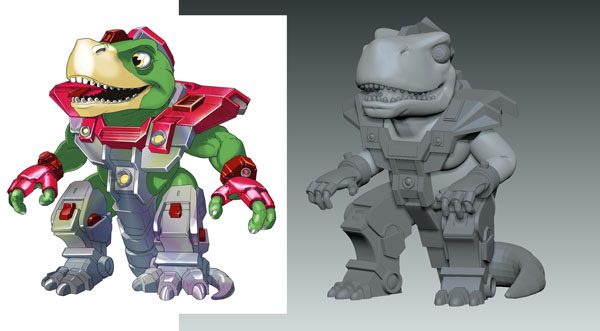
- We prepare a project plan and quote. Once you approve, we produce a 3D model and full-color renderings for approval; renderings and finish samples generally take 3–5 business days.
- We build a prototype or first article (2–4 weeks), then move to production (standard 3–6 weeks depending on quantity and finish).
- We finish, package and deliver, with event coordination where needed.
Not every step applies to every project. A simple piece may move much faster, and rush production is possible for tight deadlines. Whatever you send, do not wait for a perfect brief. A partial one still gets the conversation started, and we will ask for what is missing.
Send what you have, even if it is only a sketch and a date, and we will come back with questions and a quote within 24–48 business hours.
Request a QuoteFrequently Asked Questions
What information do I need to request a custom fabrication quote?
At minimum, tell us what the piece is, where it will be used, the arrival date, quantity and approximate size. Add reference images, sketches or CAD files, brand assets such as vector logos and Pantone codes, finish expectations, shipping destinations and NDA requirements. You can submit with partial information and we will ask for the rest.
Do I need a 3D file to get a quote?
No. If you have STL, OBJ or STEP files, send them. If not, a sketch, dimensions and reference images are enough for our 3D design team to build the model, and we provide renderings for approval before fabrication. Designs we create for you are yours.
Who should approve the design, and why does it matter?
Name the decision-makers and how quickly they respond. Slow approvals are a common cause of missed dates, so tell us who signs off on proofs and whether an NDA is needed. We focus on commercial and production projects, with no minimum quantity, and we quote each project individually based on size, detail, finish and timing.
How fast will I get a quote?
We typically respond within 24–48 business hours for custom projects. We then usually schedule a call to review scope, timing and open questions before sending a project plan and quote. The more complete your first message is, the fewer follow-up questions we need and the faster the quote comes together.
What is the difference between a hard deadline and a target date?
A hard deadline is set by something outside your control, such as a load-in, shoot or broadcast date. A target date is flexible. Telling us which applies helps us decide whether standard production works or whether rush production, available at a premium, is needed.
Can I request a quote if the design is confidential?
Yes. NDA management is standard for us. Mention the NDA requirement in your request, especially for unreleased products, so it can be in place before you share files, renderings or specifications. We keep confidential projects confidential through design, fabrication and delivery.
Have a project in mind?
Hollywood 3D Printing designs, fabricates, and finishes custom pieces for brands, agencies, productions, and events, all under one roof in Los Angeles. Tell us what you’re building and when you need it.
Start Your Project TodayPrefer to talk it through? Call (323) 645-7640.
Related Reading