hold.that.thought. Blog
How Long Does Custom Fabrication Take? Lead Times by Project
By Hollywood 3D Printing ·
Key Takeaways
- Most custom fabrication projects take 2 to 6 weeks in total; a standard painted prop is 2 to 4 weeks and a plated prop is 3 to 5 weeks.
- Chrome or gold electroplating adds about 2 weeks, while Pantone spray or metallic paint adds only 2 to 3 days.
- Simple scale models take 2 to 4 weeks and complex ones 4 to 8; contact us 6 to 8 weeks before a trade show for complex builds.
- Revisions, slow approvals, plating, large quantities and shipping are the main things that stretch a schedule.
- Rush production is available, and stating your deadline in the first quote request gives us the most options.
Most custom fabrication projects at our Los Angeles studio take 2 to 6 weeks from approved design to delivery. A standard prop with painting takes 2 to 4 weeks, and 3 to 5 weeks with chrome or gold electroplating. Simple scale models take 2 to 4 weeks and complex ones 4 to 8. For trade shows, contact us 6 to 8 weeks before the show for complex builds. Rush production is available, and some projects have gone out in days or next-day.
Those ranges are wide on purpose. The fastest jobs are a simple piece with a single painted finish and quick approvals; the slowest combine large size, plating, big quantities and slow feedback. Below we break the timeline into the steps that actually take time, so you can work backward from your date and see where you have room to compress.
How long does each step of a custom fabrication project take?
Our standard process runs from design consultation to 3D model and renderings, then a first-article prototype, production, finishing and packaging, and finally delivery. Here is what each step typically takes.
| Step | Typical time | Notes |
|---|---|---|
| Quote reply | 24 to 48 business hours | For custom projects; mention your deadline in the request |
| Renderings and finish samples | 3 to 5 business days | 3D model and full-color renderings for your approval |
| Prototype or first article | 2 to 4 weeks | Finished sample approved before production |
| Standard production | 3 to 6 weeks | Depends on quantity and finish; runs over 100 units get mid-production samples |
| Single-part foam milling | 2 to 4 days after production begins | Larger or higher-quantity orders take longer; quotes include lead time |
| 3D scanning | 1 to 3 days | We hold the part while it is scanned |
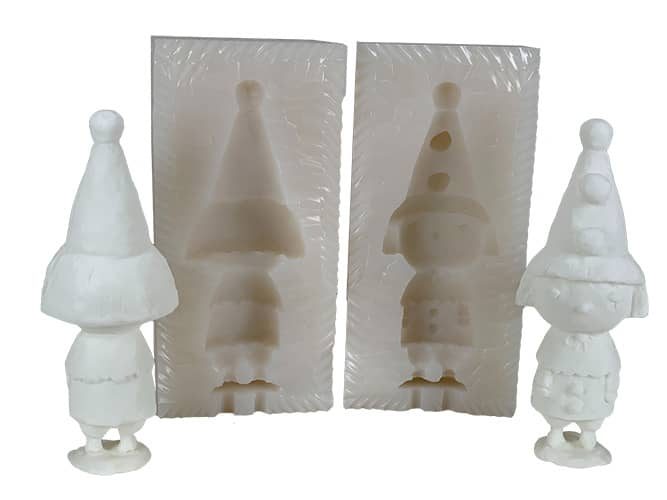
| Silicone mold delivery | About 2 weeks | Master is printed by us in SLA resin |
| Single-color Pantone spray | Adds 2 to 3 days | Tested under multiple lighting conditions |
| Metallic gold or silver paint | Adds 2 to 3 days | Faster than plating, less lustrous |
| Detailed hand painting | Adds up to 1 week | Figurines, character work, fine detail |
| Chrome or gold electroplating | Adds about 2 weeks | Multi-step process on sanded SLA resin |
These stages often overlap and do not always run back to back, which is why a typical whole project lands at 2 to 6 weeks. If you need every stage in full, and a large quantity on top, plan toward the longer end.
How long does each project type take?
The table below applies the step times to the types of work we are asked about most. Where two sources of ours give different numbers, we list the more conservative one.
| Project type | Typical lead time | What it assumes |
|---|---|---|
| Custom prop, painted and finished | 2 to 4 weeks | From approved design |
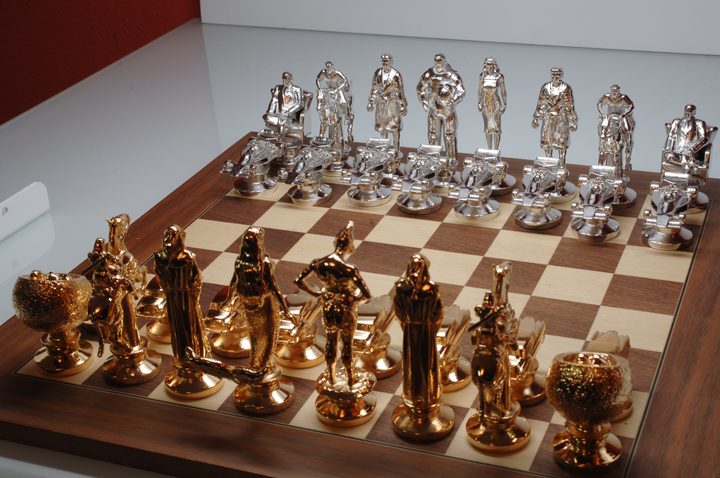
| Custom prop with chrome or gold plating | 3 to 5 weeks | From approved design; plating adds about 2 weeks |
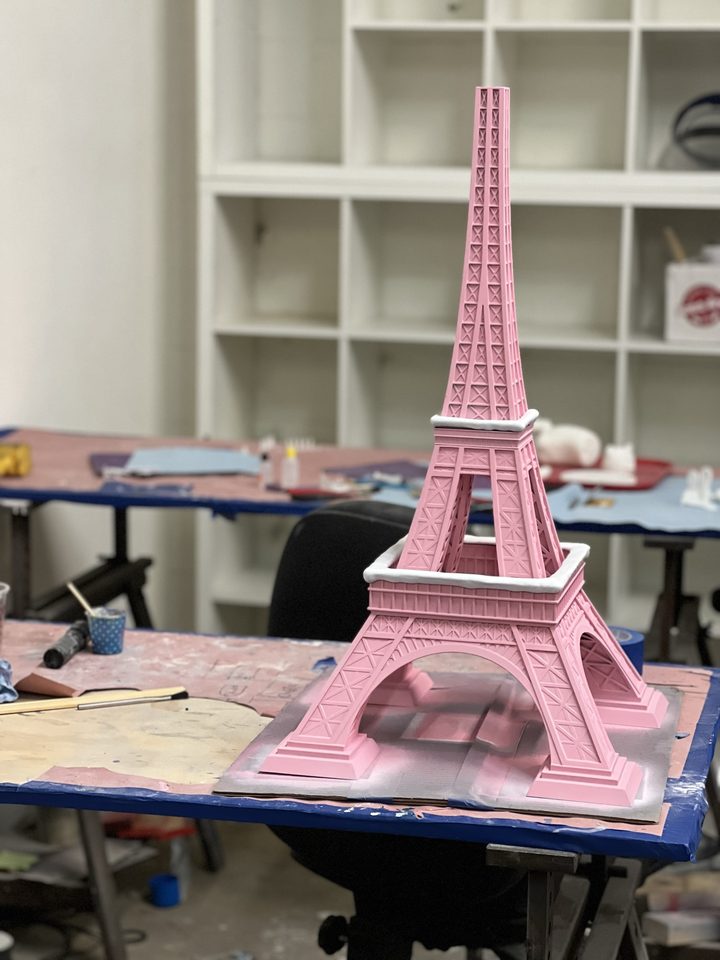
| Simple single-building scale model | 2 to 4 weeks | Architectural or product model |
| Complex or multi-structure scale model | 4 to 8 weeks | Detailed product models fall here too |
| Trophy series | Prototype 2 to 4 weeks, then production 3 to 6 weeks | Approve the first article before production |
| Trade show display (complex build) | Contact us 6 to 8 weeks before the show | Includes crating and shipping to the venue or warehouse |
| Silicone mold | About 2 weeks | Then casting time on top, by quantity |
| Rush piece | Days or next-day possible | Depends on capacity and scope; ask early |
Props and set pieces
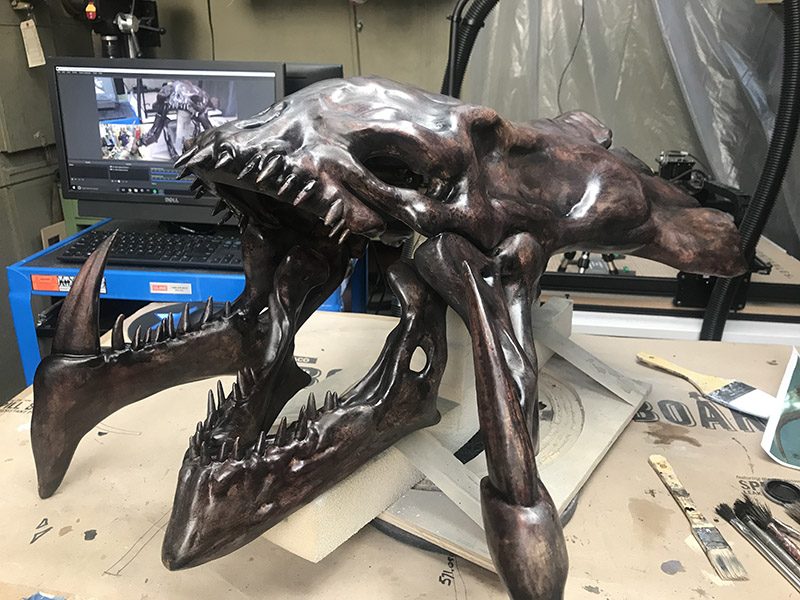
A standard custom prop with full painting takes 2 to 4 weeks from approved design, and 3 to 5 weeks if it is chrome or gold plated. Our guide to props for film, TV and commercials covers schedule planning for productions.
Scale models
A simple single-building model takes 2 to 4 weeks. A complex multi-structure model or a detailed product model takes 4 to 8. Large permanent models can include white-glove delivery and installation. See scale models for what is included.
Trophies and awards
We make a first article in 2 to 4 weeks, then run standard production in 3 to 6. For series of 100 or more we send mid-production samples. If your ceremony date is fixed, read how to plan a custom trophy program before you brief anyone.
Trade show and event displays
For a complex build, contact us 6 to 8 weeks before the show. Pieces are built to break down into labeled modules, packed in crates sized to each piece, test-fitted in the studio, and shipped to the venue, exhibit warehouse or booth contractor. Freight has its own deadlines, set by the show’s general services contractor, so the fabrication deadline is usually earlier than the show date. Details are on our trade show display page.
What makes a custom fabrication timeline stretch?
Most delays trace back to the same five causes:
- Revisions. Each change to a model or rendering sends the work back a step. Collect feedback from every stakeholder before responding.
- Slow approvals. The clock effectively pauses while a rendering or first article waits for sign-off.
- Plating. Chrome and gold electroplating add about two weeks because of the surface preparation and multi-step process involved.
- Quantity. Larger runs take longer to produce and finish, and runs over 100 units include a mid-production sample review.
- Shipping and freight. Crating, carriers and show-site deadlines add days that sit outside fabrication.
Painted parts are not released until they are fully dry and cured, so finishing cannot be safely squeezed beyond a point. We would rather tell you honestly what is possible than promise a date that puts the finish at risk.
How do I work backward from my event date?
Start from the date the piece must be in place, not the date it must leave our shop, and subtract each stage.
- Set the on-site date. Use the day the piece has to be installed or delivered, not the day of the event itself.
- Subtract shipping and buffer. Local delivery in Los Angeles can be same-day. Shipping nationwide or internationally, or via a trade show warehouse, needs its own days plus a cushion.
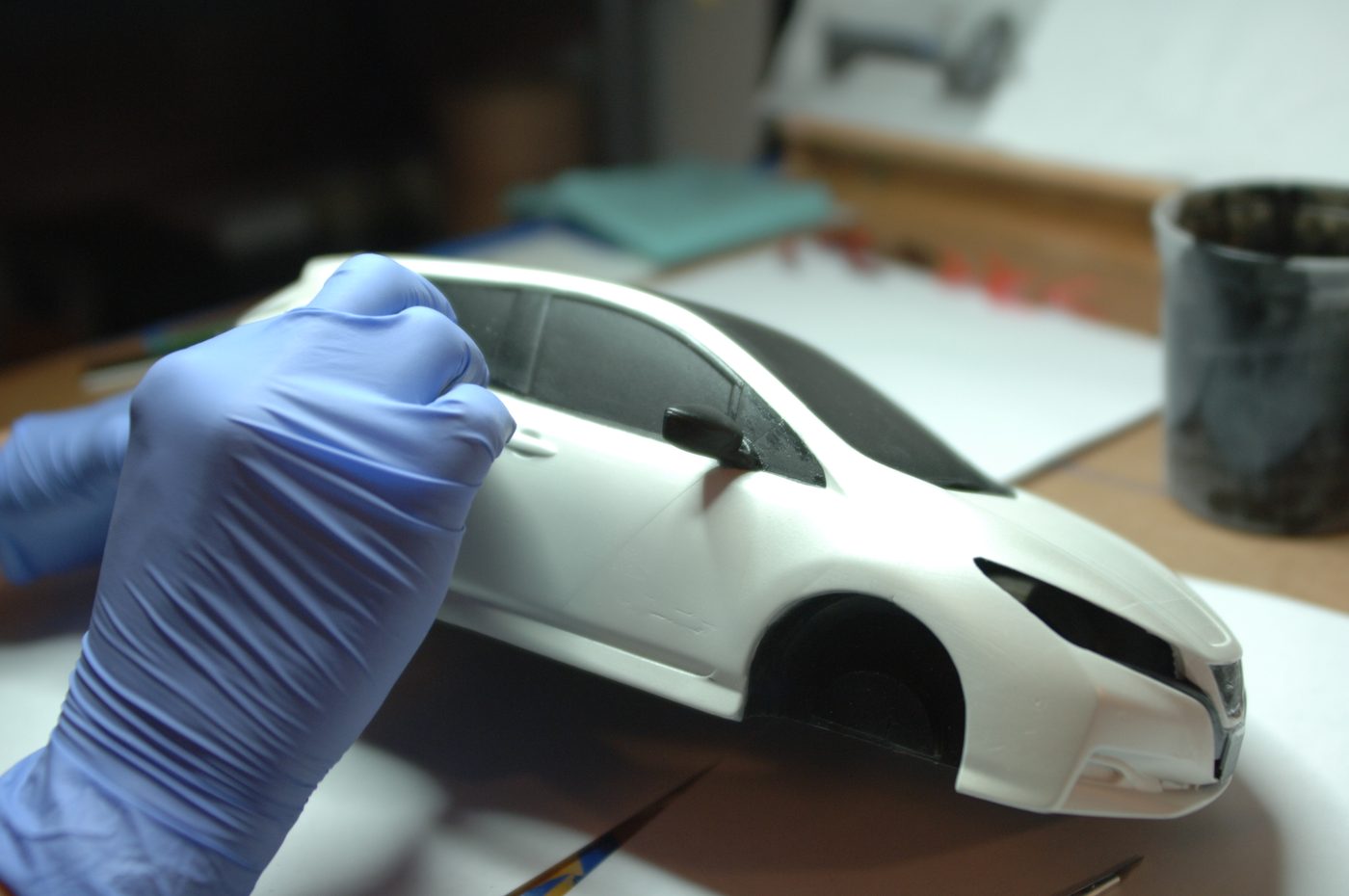
- Subtract finishing. Add 2 to 3 days for painting, up to a week for detailed hand painting, and about 2 weeks for plating.
- Subtract production. Standard is 3 to 6 weeks depending on quantity; a first article, if needed, is 2 to 4 weeks before that.
- Subtract design and approvals. Allow 3 to 5 business days for renderings, plus your own review time, and 24 to 48 business hours for the initial quote.
If the date you land on has already passed, the project is a rush job. That is not a problem in itself, but it changes the approach: fewer revisions, a faster finish choice, and a decision-maker who can approve in hours.
What rush options exist, and how do I ask for them?
We offer rush production for time-critical campaigns, activations, trade shows and award events. Requests that need delivery within days or next-day are not unusual for us. Rush work depends on current studio capacity, so the sooner you ask, the more options exist. The tools that shorten a schedule are usually:
- Swapping electroplating for metallic paint, which adds 2 to 3 days instead of about 2 weeks.
- Using a single-color Pantone spray rather than detailed hand painting.
- Choosing foam milling for large forms, where single parts typically finish 2 to 4 days after production begins.
- Supplying a finished file, so the design stage is skipped.
- Naming one decision-maker for all approvals.
To ask, put the date in the first line of your quote request. Every custom quote we send includes an estimated lead time, and you will know within 24 to 48 business hours whether the date is realistic. For a full list of what to send, see what to include in a quote request. Our custom fabrication page outlines the full process.
Tell us your on-site date and we will confirm whether it works on a standard schedule or needs rush production.
Request a QuoteFrequently Asked Questions
How long does it take to make a custom prop?
A standard prop with painting and finishing takes 2 to 4 weeks from approved design. With chrome or gold electroplating it takes 3 to 5 weeks. Renderings for approval usually come in 3 to 5 business days, and rush production is available for tight schedules. Each quote includes an estimated lead time.
How far in advance should I order a trade show display?
We recommend contacting us 6 to 8 weeks before the show for complex builds. That leaves room for design approval, fabrication, finishing, crating and freight to the venue or exhibit warehouse. Rush timelines are available, and earlier contact gives more options.
How long does chrome plating a 3D print take?
Chrome and gold electroplating each add about two weeks to a project, because the resin part needs careful sanding and a multi-step metal deposition process. If the deadline is tight, metallic gold or silver paint adds only 2 to 3 days, though it is less lustrous than real plating.
Do you offer rush fabrication in Los Angeles?
Yes. We offer rush production for time-sensitive campaigns, activations, trade shows and award events, and some requests are delivered within days or next-day. Rush depends on studio capacity, so state your deadline in the first quote request.
How long does a scale model take to build?
A simple single-building model typically takes 2 to 4 weeks. Complex multi-structure models or detailed product models take 4 to 8 weeks. The timeline depends on scale, detail, finish, lighting or case requirements, and how quickly design approvals come back.
Have a project in mind?
Hollywood 3D Printing designs, fabricates, and finishes custom pieces for brands, agencies, productions, and events, all under one roof in Los Angeles. Tell us what you’re building and when you need it.
Start Your Project TodayPrefer to talk it through? Call (323) 645-7640.
Related Reading