hold.that.thought. Blog
Custom Props for Film, TV, and Commercials: How Hero Props Are Made
By Hollywood 3D Printing ·
Key Takeaways
- A standard custom prop with painting and finishing takes 2 to 4 weeks from approved design, and 3 to 5 weeks with chrome or gold electroplating.
- Hero props get close-ups and handling, so they justify SLA resin detail, careful sanding and real metal plating; background pieces can use simpler builds.
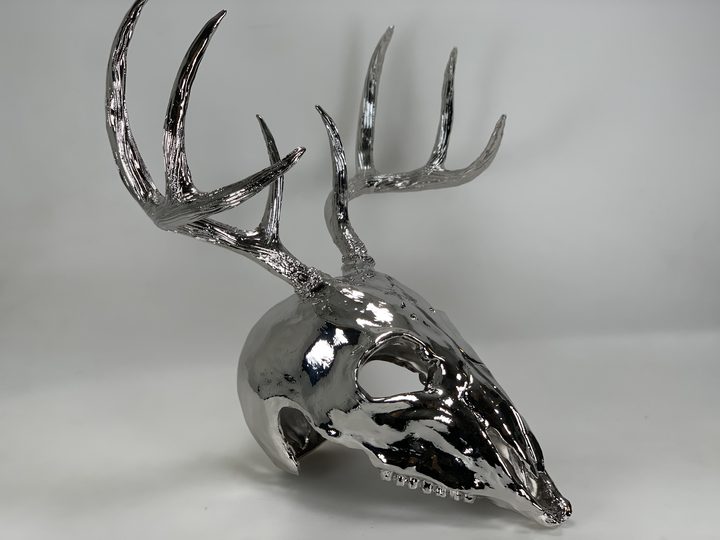
- Real chrome or gold plating is deposited metal and reads as cast metal under production lighting, while metallic spray paint does not hold up the same way.
- Send the shoot date, references, size, finish and quantity with your request; NDA management is standard and there is no minimum quantity.
- We focus on commercial and production projects and do not take personal, hobby or student work.
A hero prop is made by turning an approved design into a physical object that can survive a close-up: we model it, print it in SLA resin (for detail) or FDM and milled foam (for size), sand it, paint or plate it, and check the finish against your reference under several kinds of light. For a standard painted prop that takes 2 to 4 weeks from approved design, and 3 to 5 weeks when real chrome or gold plating is involved. Shoot dates drive the schedule, so tell us the date first and we work backward from it.
This guide is written for prop masters, art directors, production designers and agency producers who need a one-off or short-run object built for camera. We are a fabrication studio in Los Angeles, and this is how we run these jobs.
What is the difference between a hero prop, set dressing and a background prop?
The three categories differ by how close the camera gets and how long the object stays in frame. That decides how much fabrication effort each one deserves.
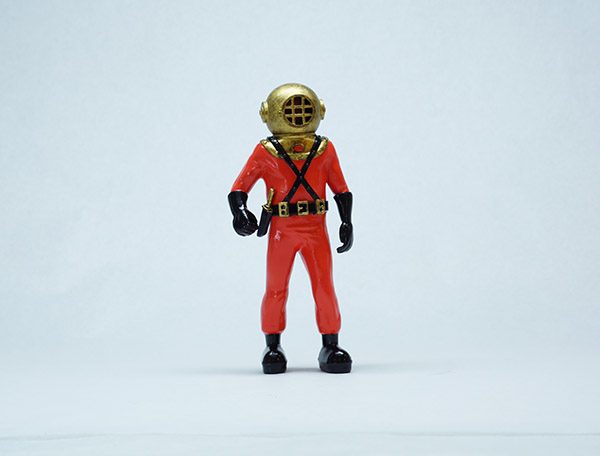
- Hero props are handled by talent or featured in close-ups. They get the most screen time, so detail, finish and weight all get scrutiny. A trophy that is lifted on camera, a product a character holds up, a weapon, a helmet, a logo that fills the frame.
- Set dressing fills out the environment: sculptural pieces, display pedestals, decorative objects, faux marble or stone accents. It is seen, but usually not from six inches away.
- Background props read at a distance and can often be simpler builds.
We build all three, but our sweet spot is the hero end: character props, dimensional logos, product replicas, oversized mockups, broadcast trophy props and mascots. If a piece has to hold up to a lens, it deserves the extra attention. If it only needs to read at a distance, tell us, and we will point you to a lighter build.
Why is 3D printing a good fit for one-off and short-run props?
Props are usually made once or a handful of times, and traditional tooling (molds, machined parts, cast metal) is built for repeat runs rather than a one-off. Printing goes straight from a digital model to a physical part with no tooling. There is no minimum quantity on our side, so one piece is a normal order, and if you need a stunt double or a spare for reshoots, we can make duplicates from the same file.
Printing also solves the reference problem. If the prop must match a sketch, a concept painting or a real object, we can work from 3D design (a sketch plus dimensions and reference images is enough) or 3D scanning of an existing item. The client owns any designs we create.
The choice of process depends on the piece. We compare the options in more depth in 3D printing vs. foam milling vs. hand sculpting, but the short version:
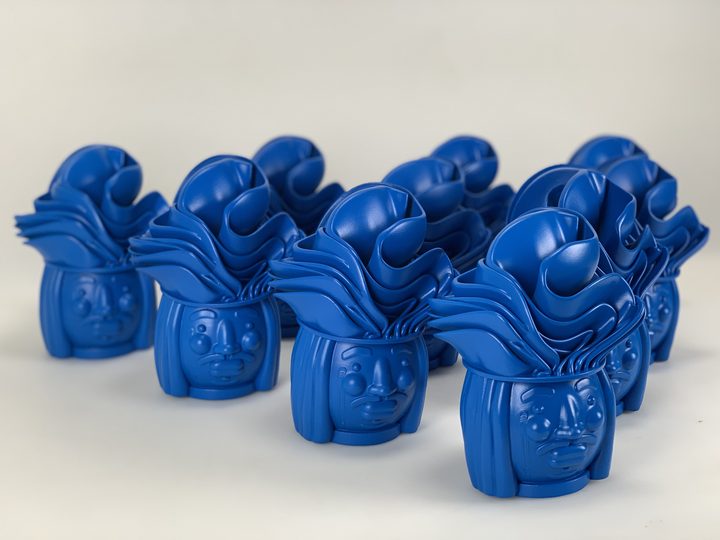
- SLA resin printing gives high detail and a smooth surface. It is our choice for hand-painted pieces, small hero props and anything that will be plated.
- FDM printing suits large structural volumes where visible layer lines will be sanded and coated over.
- 5-axis CNC foam milling handles big pieces economically. HDU urethane foam holds sharper detail than EPS, and pieces are built in sections and assembled.
- Hand-sculpted foam works from reference images when a piece is large, organic and does not need machine precision.
How does the custom prop process work, step by step?
- Brief and shoot date. You send the concept, references, size and the date the prop must be on set.
- NDA. NDA management is standard here, which matters for unreleased products and unannounced projects.
- 3D model and renderings. We build the model and send full-color renderings for approval. Renderings and finish samples typically arrive within 3 to 5 business days.
- Fabrication. Detailed pieces are printed in SLA resin, large volumes in FDM, and big shapes are milled from foam, in sections if needed.
- Sanding and prep. Every part is fully sanded to remove build lines. Foam gets an epoxy hard coat first.
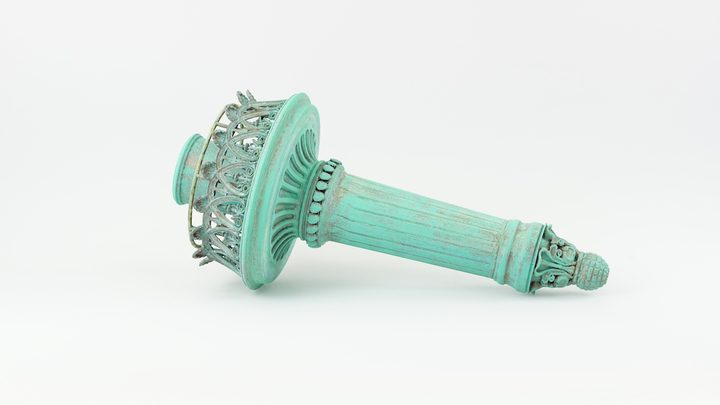
- Finishing. Paint, airbrush, plating, patina or weathering, depending on the design.
- Verification. We check color and finish against your reference under multiple lighting conditions, and painted parts are not released until fully dry and cured.
- Packaging and delivery. Custom packaging, with foam-lined packaging for plated pieces, then delivery coordinated with your production office: local pickup or same-day delivery in LA, or shipping nationwide and internationally.
Which method and finish suit which type of prop?
This table is a starting point, not a quote. Size, complexity and finish change the answer, and we confirm the approach when we see your references.
| Prop type | Typical method | Finish options |
|---|---|---|
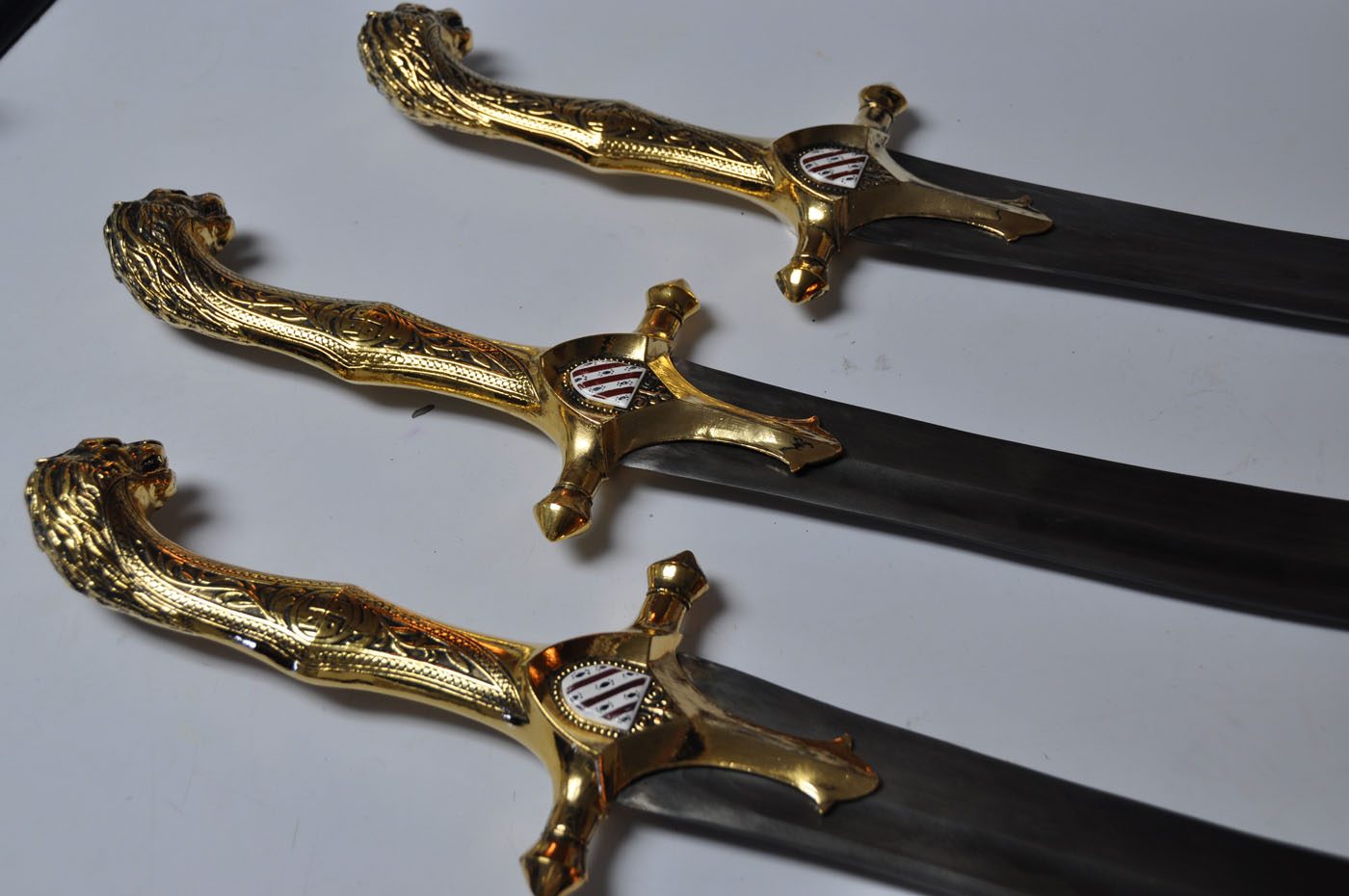
| Handheld hero prop (weapon hilt, device, small object) | SLA resin, sanded | Hand-painted, airbrushed, chrome or gold plating, patina |
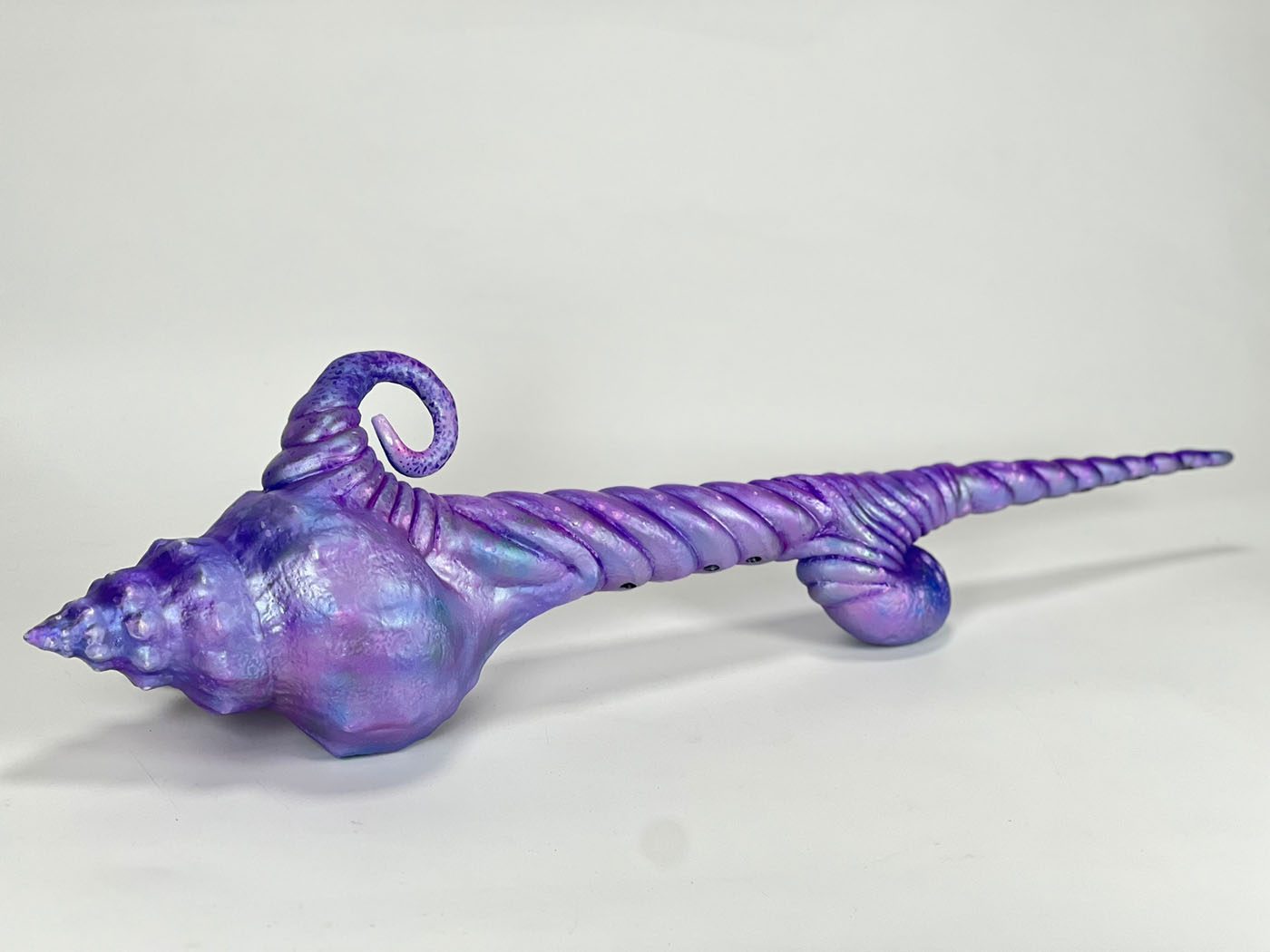
| Character prop (helmet, mask, creature piece) | SLA or FDM in sections, or milled foam | Automotive-grade gloss, weathering, metallic finishes |
| Broadcast trophy prop | SLA resin, sometimes cast | Gold or chrome plating, Pantone-matched paint, patina |
| Dimensional logo or lettering | SLA, FDM or milled foam by size | Pantone paint, chrome, gold, brushed metallic looks |
| Product replica (actual or oversized) | SLA for small, foam and FDM for large | Pantone-matched color, decals for graphics, texture matching |
| Large set piece or sculptural mockup | 5-axis foam milling with epoxy hard coat | Airbrush, faux marble, stone or wood-grain effects |
Why does real chrome or gold read differently on camera than metallic paint?
Our chrome and gold plating is real metal deposited onto the part: a copper base with rhodium for chrome, copper with gold for gold. It behaves like cast metal because it is metal. Under production lighting it reflects the environment the way a real polished surface does. Metallic spray paint is pigment suspended in a coating, and it does not hold up the same way when lights are moved around it.
Plating has requirements. Parts must be SLA resin sanded to 1000-grit, and the finish can be mirror or satin. Chrome and gold electroplating each add roughly 2 weeks, depending on size and complexity. Metallic gold or silver paint adds only 2 to 3 days, and it is the right call when the prop is far from camera or only briefly visible. We cover the trade-offs in chrome and gold plating for 3D printed parts.
Plating is not always the answer
If a prop will be in soft focus or in frame for a second, high-end metallic paint can save two weeks. If an actor lifts it toward the lens, plate it.
Are 3D printed props durable enough for the set?
Durability depends on the material and the job, so it is worth saying what the prop has to do. Is it held by an actor, dropped, thrown, left in the sun, or shipped between locations? Tell us, and we design around it: wall thickness, internal reinforcement for larger pieces, and durable clear coats over paint. Resin parts are stiff and can chip at thin edges, and foam is light but needs its hard coat to survive handling. We will tell you where a design is fragile and how we would strengthen it.
If a prop will be handled roughly, ask for a duplicate. Because there is no tooling, a second copy is often a small fraction of the effort of the first, and having a spare on set is good insurance against a reshoot delay.
How long does a custom prop take, and what should I send with a request?
A standard prop with painting and finishing runs 2 to 4 weeks from approved design. With chrome or gold plating, plan on 3 to 5 weeks. Rush production is available for tight shoot dates, and the earlier you tell us the date, the more options we have. Our full timeline breakdown is in custom fabrication lead times.
To get an accurate quote quickly, send:
- The shoot or delivery date and where the prop must arrive.
- Reference images, sketches or a file (STL, OBJ, STEP or IGES work). No file is fine.
- Size, and whether it will be handled by talent or only seen from a distance.
- Finish: color codes or Pantone swatches, metal type, aging or weathering.
- Quantity, including any spares or stunt duplicates.
- Whether an NDA is needed before you share the brief.
More on what makes a request quotable is in what to include in a custom fabrication quote request.
Prop house or fabrication studio: which one do I need?
A prop house rents you existing inventory, which is often the fastest route when a suitable item exists. A fabrication studio makes something that does not exist yet: a product not on the market, a branded object, a custom character piece, or a hero item that must match a design exactly. Many productions use both, renting the common pieces and commissioning the ones that carry the story.
We focus on commercial and production projects, which fits productions and agencies commissioning meaningful pieces. It is not a fit for personal or hobby work. If you are planning a schedule, our lead-time guide explains what drives the timeline. For more about our prop work, see our custom props for film and TV page, the wider custom fabrication service, and painting and finishing.
Send us your shoot date and references, and we will tell you what is realistic and what it takes to get the prop on set.
Request a QuoteFrequently Asked Questions
How are hero props made for commercials and film?
We build a 3D model, send full-color renderings for approval, then fabricate the prop by SLA resin printing, FDM printing or CNC foam milling depending on size and detail. Parts are sanded, painted or plated, and checked against your reference under multiple lighting conditions before packaging and delivery to the production office.
How long does a custom prop take to make?
A standard prop with painting and finishing typically takes 2 to 4 weeks from approved design. Adding chrome or gold electroplating brings it to about 3 to 5 weeks. Rush production is available for tight shoot dates, so give us the date at the start and we will tell you what is possible.
Can you make a prop look like real chrome or gold?
Yes. We electroplate SLA resin parts with real metal: copper plus rhodium for chrome, copper plus gold for gold, in mirror or satin finishes. Chrome and gold each add about 2 weeks. Metallic paint is a faster alternative for distant shots.
Do you sign NDAs for unreleased products and productions?
Yes. NDA management is standard for our work with productions, agencies and brands. Tell us at the start if you need an NDA signed before you share the brief, references or files, and we will handle it before any design work begins.
Is there a minimum order for a single prop?
There is no minimum quantity, so one piece is a normal order. We focus on commercial and production projects. We do not take personal, hobby or student projects, so the service is aimed at productions, agencies and brands.
Should I rent from a prop house or commission a fabrication studio?
Rent when a suitable item already exists in inventory; it is usually faster. Commission a fabrication studio when the object does not exist yet, must match a specific design, carries a brand, or needs to be a hero piece. Many productions do both on the same project.
Have a project in mind?
Hollywood 3D Printing designs, fabricates, and finishes custom pieces for brands, agencies, productions, and events, all under one roof in Los Angeles. Tell us what you’re building and when you need it.
Start Your Project TodayPrefer to talk it through? Call (323) 645-7640.
Related Reading