hold.that.thought. Blog
Chrome and Gold Plating 3D Printed Parts: Process and Timeline
By Hollywood 3D Printing ·
Key Takeaways
- You can chrome or gold plate a 3D print if it is printed in SLA resin and sanded to 1000-grit first.
- Electroplating deposits real metal, a copper base and then rhodium for chrome or gold for gold, in a mirror or satin finish.
- Chrome and gold each add about two weeks to the schedule.
- Metallic spray paint adds only 2–3 days and is faster, but it does not hold up the same way under production lighting.
- Decide on plating at the design stage so the part is prepared and scheduled for it.
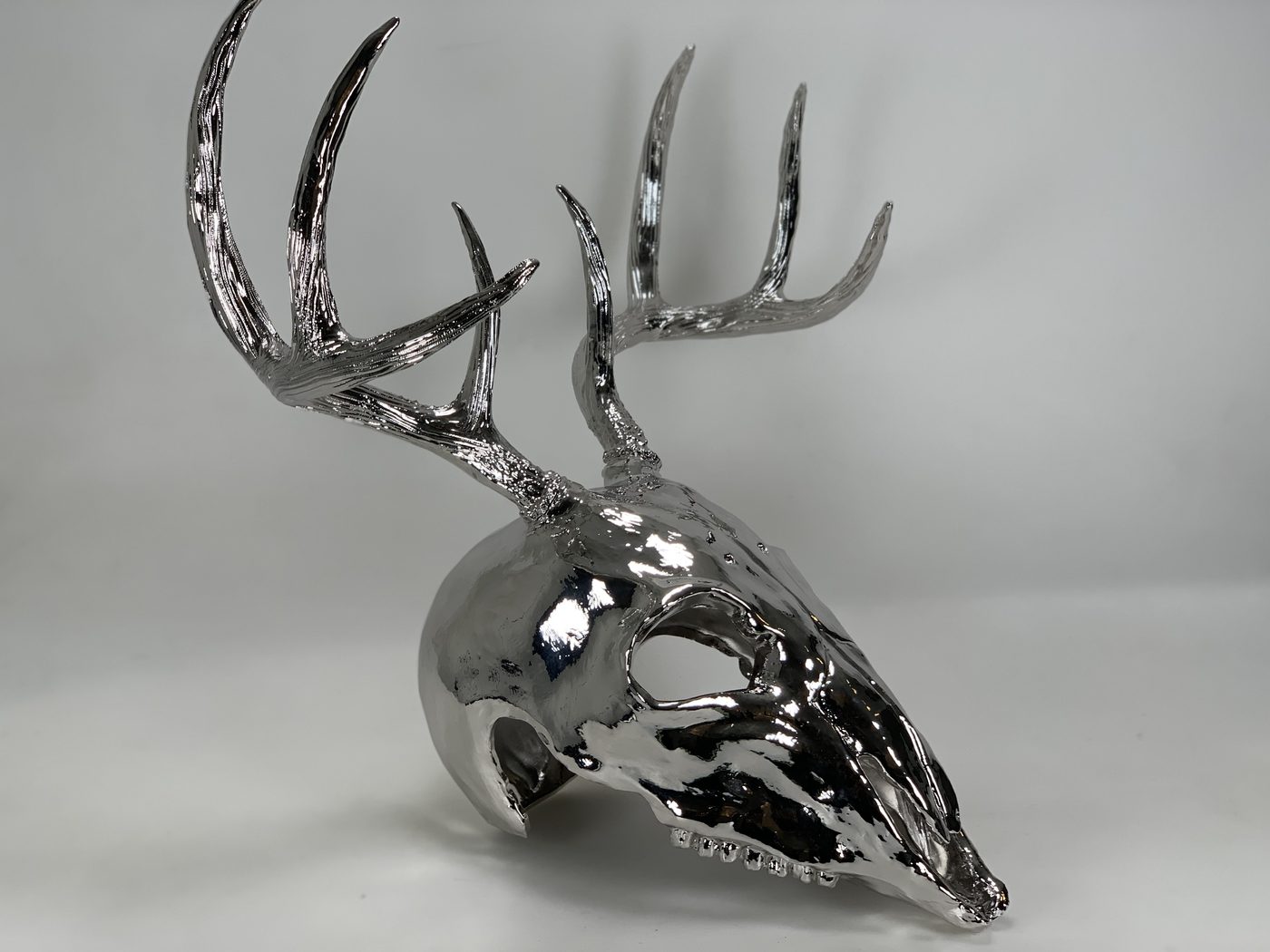
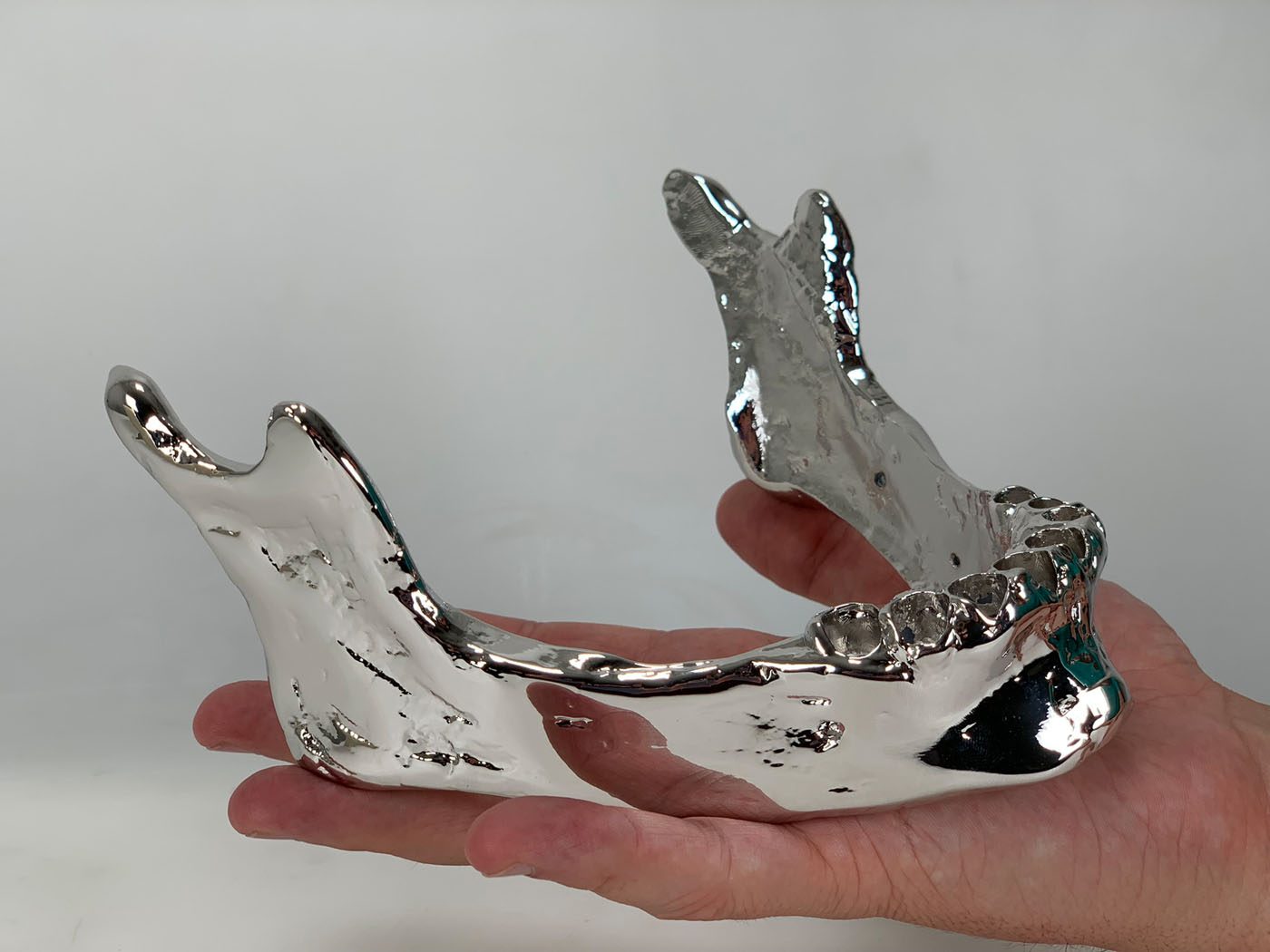
Yes, you can chrome or gold plate a 3D print, as long as it is printed in SLA resin and sanded to 1000-grit first. We deposit real metal, a copper base followed by rhodium for chrome or gold for gold, onto the resin part, in a mirror or satin finish. Each adds about two weeks to the schedule, depending on the size and complexity of the piece.
How does electroplating a 3D printed part actually work?
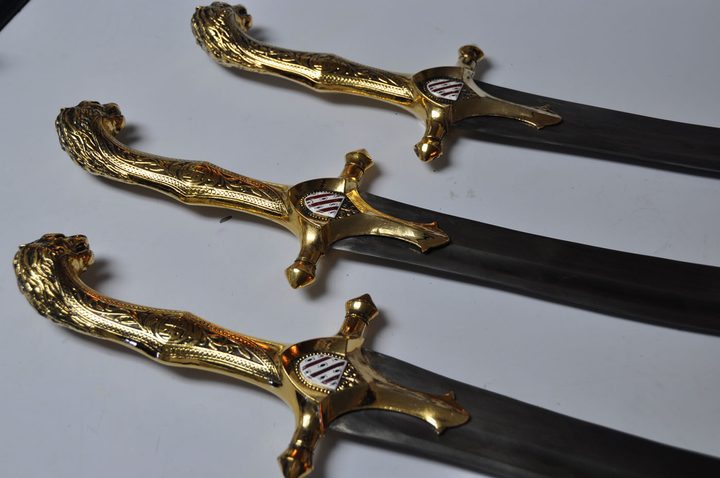
Resin does not conduct electricity, and electroplating needs a conductive surface to draw metal out of the bath. So the part is first made conductive, then a copper base is built up on it. Copper is the foundation the finish metal bonds to. For chrome, the top layer is rhodium; for gold, it is gold. What you end up with is a thin skin of real metal over a printed core, not a paint that imitates metal.
That distinction matters on set and on stage. Metal reflects light the way metal does: sharp highlights, deep reflections, and correct behavior when a camera moves around it. Our plated pieces read as cast metal on camera, and metallic spray paint does not hold up the same way under production lighting.
What does the process look like from order to delivery?
- Design and approval. We build or clean up the 3D model and send full-color renderings for approval. Renderings and finish samples typically take 3–5 business days.
- SLA printing. The piece is printed in resin, in sections if it is large.
- Sanding to 1000-grit. Build lines are removed and the surface is made uniform.
- Plating. The copper base goes on first, then rhodium for chrome or gold for gold, in mirror or satin.
- Assembly, mounting and packing. Plated parts are joined to bases, nameplates or painted elements, then packed in foam-lined custom packaging.
- Delivery. Local pickup or same-day delivery in Los Angeles, or shipping nationwide and internationally.
For a single hero piece we usually make a prototype or first article first, which takes 2–4 weeks. That is the point where you see the real shape in your hands and can change it before any plating money is spent. When the piece is one of many, the first article also becomes the reference that the rest of the run is checked against, and runs over 100 units get mid-production samples.
Which pieces are good candidates?
Pieces with clear silhouettes, smooth surfaces and confident forms plate beautifully: busts, figures, spheres, lettering, sculptural shapes and props that need to read as solid metal. Pieces built around very fine, shallow texture are riskier, because that texture is exactly what surface preparation and plating soften. If you are unsure, send us the model or a picture and we will tell you honestly whether plating will do the design justice or whether a painted metallic finish would serve you better.
Why does the part have to be SLA resin sanded to 1000-grit?
Plating does not hide flaws; it reproduces them and often makes them easier to see. A mirror finish reflects every scratch, pit and layer line in the surface underneath. That is why we only plate SLA resin parts. SLA gives a smooth, high-detail surface to start from, which our guide to SLA resin printing explains in more detail. FDM prints have visible layer lines and are the wrong starting point for a reflective finish.
Before plating, every part is sanded to 1000-grit. That is a fine, even surface: enough to remove build lines and leave a uniform base for the copper layer. If you already have a printed piece from another source, note that we do not accept customer-supplied parts for finishing; finishing is part of an order where we fabricate the piece.
What does a plating project involve?
Scope depends on the size and complexity of the piece, and we quote every project individually. Here is how the three metallic options compare in what they add to a project:
- Chrome electroplating: a copper base followed by rhodium, in a mirror or satin finish, adding about two weeks.
- Gold electroplating: a copper base with a gold top layer, adding about two weeks.
- Metallic gold or silver paint: a faster route that adds only 2–3 days.
Plating is one step within a larger project that also includes design, printing and any other finishing. We focus on commercial and production projects, and there is no minimum quantity, so a single plated hero piece is a fine order. For more on how the schedule builds up across stages, see our custom fabrication lead-time guide.
How long does plating take?
Plan on roughly two weeks added for either chrome or gold electroplating. A standard prop with painting and finishing runs 2–4 weeks from approved design, and adding chrome or gold electroplating brings that to 3–5 weeks. Because the plating time is fixed, we recommend deciding on the finish at the design stage rather than after printing; our lead times guide walks through the full schedule.
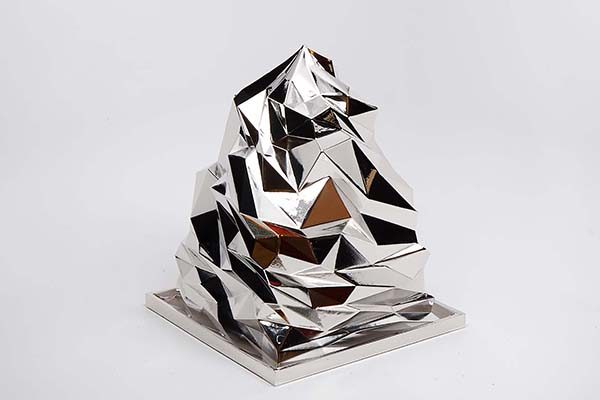
Electroplating vs metallic paint vs vacuum metalizing: which should you choose?
All three can make a printed part look metallic. They are different tools, and the right one depends on what the piece has to do.
| Electroplating | Metallic spray paint | Vacuum metalizing | |
|---|---|---|---|
| What it is | Real metal (copper base, then rhodium or gold) deposited on SLA resin | Metallic pigment in a sprayed coating | Metal coating applied for consistency across larger runs |
| Look | Reads as cast metal; mirror or satin | Metallic look, but without the depth of real metal | Consistent metallic coating |
| On camera | Holds up under production lighting | Does not hold up the same way under production lighting | Consistent from piece to piece |
| Lead time | About 2 weeks added | 2–3 days added | Quoted per project |
| Best for | Trophies, hero props, close-up pieces | Background pieces and tight schedules | Larger runs needing a consistent coating |
Our rule of thumb: if a piece will be held, filmed in close-up or presented as the award itself, plate it. If it is background set dressing or the deadline is tight, metallic paint is fast. For larger runs where consistency across many pieces matters, ask us about vacuum metalizing. We also offer bronze, copper, brass and aluminum metallic finishes, plus patinas, verdigris and aging when you want the metal to look old rather than new; see our painting and finishing services for the full range.
Mirror or satin: how do you pick a finish?
Both are available for chrome and gold. Mirror is the classic showpiece look: bright, reflective, immediately readable as metal. Satin is softer and diffuses reflections, which tends to be kinder to photography and to fingerprints. Large smooth forms and faceted shapes make the case for mirror. A piece with lots of small detail is often easier to read in satin, because the eye is not distracted by reflections bouncing around.
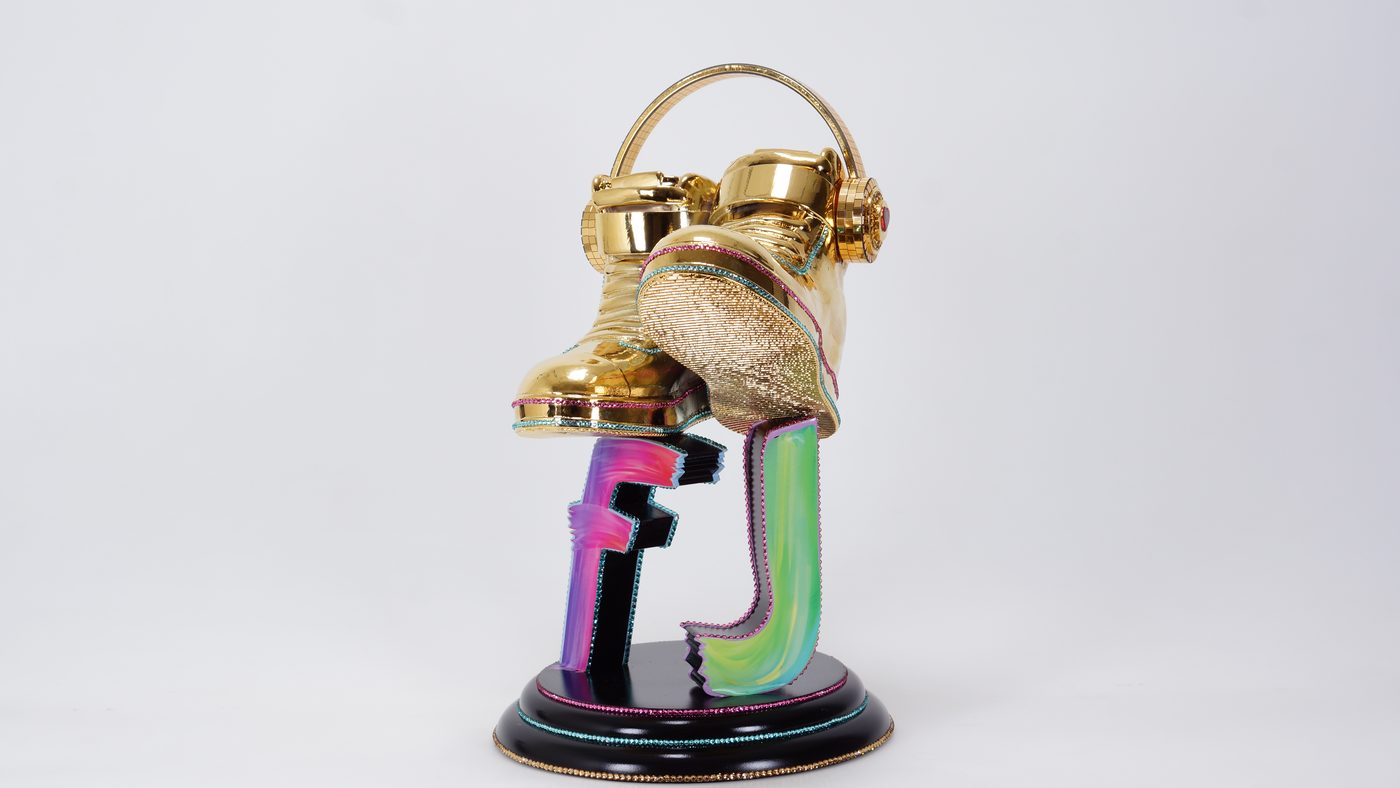
What are plated pieces used for?
- Trophies and awards: chrome and gold plating are two of the standard finishes. See our custom trophies work and the full trophy guide.
- Hero props: objects that get close-ups and need to look like real metal, from custom props for film, TV and commercials.
- Dimensional logos: raised brand marks for brand and retail environments.
- Executive and VIP gifts: serialized or limited-edition pieces for brand and marketing programs.
Design tips for a piece that will be plated
- Make key details bold. Preparation and plating add a layer over the surface, so very fine texture can soften. Keep important details large enough to read.
- Expect flaws to show. The smoother the SLA part, the better the reflection. Ask us early which details to keep and which to simplify.
- Plan for handling. Plated pieces need care in transit, which is why we use foam-lined custom packaging for them. Tell recipients to handle the piece by its base.
- Decide the finish early. Plating adds two weeks, and it is easier to design a part for plating than to rescue one afterward.
- Mix finishes on purpose. Plated metal against a matte painted base or a patina gives contrast, and we can do both on the same piece.
Finish tip
If only some parts of a piece need to look like polished metal, plate those and paint the rest. Mixing finishes on one piece often looks better than making everything chrome.
Chrome or gold: how to decide
Chrome reads as modern, cool and technical, and it photographs as a neutral silver. Gold reads as classic, celebratory and prestigious, which is why it dominates awards. Gold is the more traditional choice for trophies, while chrome suits contemporary designs. If the piece has to sit next to a brand color, hold up a swatch or send us a Pantone reference and we can discuss which metal works with it; painted elements are matched separately, as covered in our painting and Pantone matching guide.
How do you order a plated piece?
Send us a sketch, reference images or a file (STL, OBJ, STEP or IGES) and tell us the finish, quantity and delivery date. If you have no file, we do the 3D design; see 3D design and 3D printing. We typically respond within 24–48 business hours, then move through design approval, a prototype or first article, production, finishing and delivery. For the paint side of the process, read how we sand, paint and Pantone match.
Send us your piece and the finish you have in mind, and we will quote the printing and plating together.
Request a QuoteFrequently Asked Questions
Can you chrome plate a 3D printed part?
Yes, if it is printed in SLA resin and sanded to 1000-grit. We deposit a copper base and then rhodium for a chrome finish, in mirror or satin. FDM prints are not suitable for plating because their layer lines would show through a reflective surface. Chrome electroplating adds about two weeks.
How does gold plating a 3D print work?
Gold electroplating is quoted per project, depending on size and complexity. It uses a copper base with a gold top layer, and adds about two weeks to the schedule. Plating is one step in the project; printing, design and other finishing are quoted together.
Is electroplating better than metallic paint?
For close-ups, handling and awards, yes. Electroplating is real metal and reads as cast metal on camera, while metallic spray paint does not hold up the same way under production lighting. Paint is faster and adds only 2–3 days, so it suits background pieces and tight schedules.
How long does chrome plating a 3D print take?
Plan on about two weeks for either chrome or gold electroplating. A standard prop with painting and finishing takes 2–4 weeks from approved design; with chrome or gold electroplating, expect 3–5 weeks. Rush production is available, so tell us your deadline when you request a quote.
What is vacuum metalizing and when should I use it?
Vacuum metalizing, also called vacuum plating, is a metal coating process we use when a consistent coating is needed across larger runs. It is a different route from electroplating, and we quote it per project. Ask us which one suits your piece and quantity.
Can you plate a part I already printed elsewhere?
No. We do not accept customer-supplied parts for finishing. Finishing is part of an order where we fabricate the piece, because plating depends on the part being SLA resin prepared to our standard of 1000-grit sanding.
Have a project in mind?
Hollywood 3D Printing designs, fabricates, and finishes custom pieces for brands, agencies, productions, and events, all under one roof in Los Angeles. Tell us what you’re building and when you need it.
Start Your Project TodayPrefer to talk it through? Call (323) 645-7640.
Related Reading