hold.that.thought. Blog
How Oversized Fabricated Pieces Ship and Assemble
By Hollywood 3D Printing ·
Key Takeaways
- Large pieces are designed as sections from the start, with breakdown points chosen along the design and every component labeled.
- Internal armatures, hardware and lightweight construction such as foam or hollow printed shells keep big pieces stable and manageable.
- We assemble and photograph each piece in our studio before breakdown, then pack it in crates sized to fit, with foam-lined packaging for plated pieces.
- Shipments include assembly instructions and phone support on install day, and freight is coordinated with venue advance-warehouse or direct-to-show deadlines.
- For complex trade show builds, contact us 6–8 weeks before the show.
Oversized fabricated pieces are engineered as sections from the start. We plan where the piece breaks down, build each section with internal armatures and hardware, label every component, test-fit the whole piece in our studio, and pack it in a crate sized to fit. The sections are joined on site with assembly instructions and phone support, and a durable clear coat helps the finish survive repeated setup and teardown.
A 10-foot centerpiece does not fit through a door, into a freight elevator or onto a standard pallet in one piece. The engineering is what makes it arrive intact and go together without a technical crew. This article walks through how we do that, and ends with a pre-install checklist you can use for any large piece, whoever builds it.
Why are large pieces designed as sections?
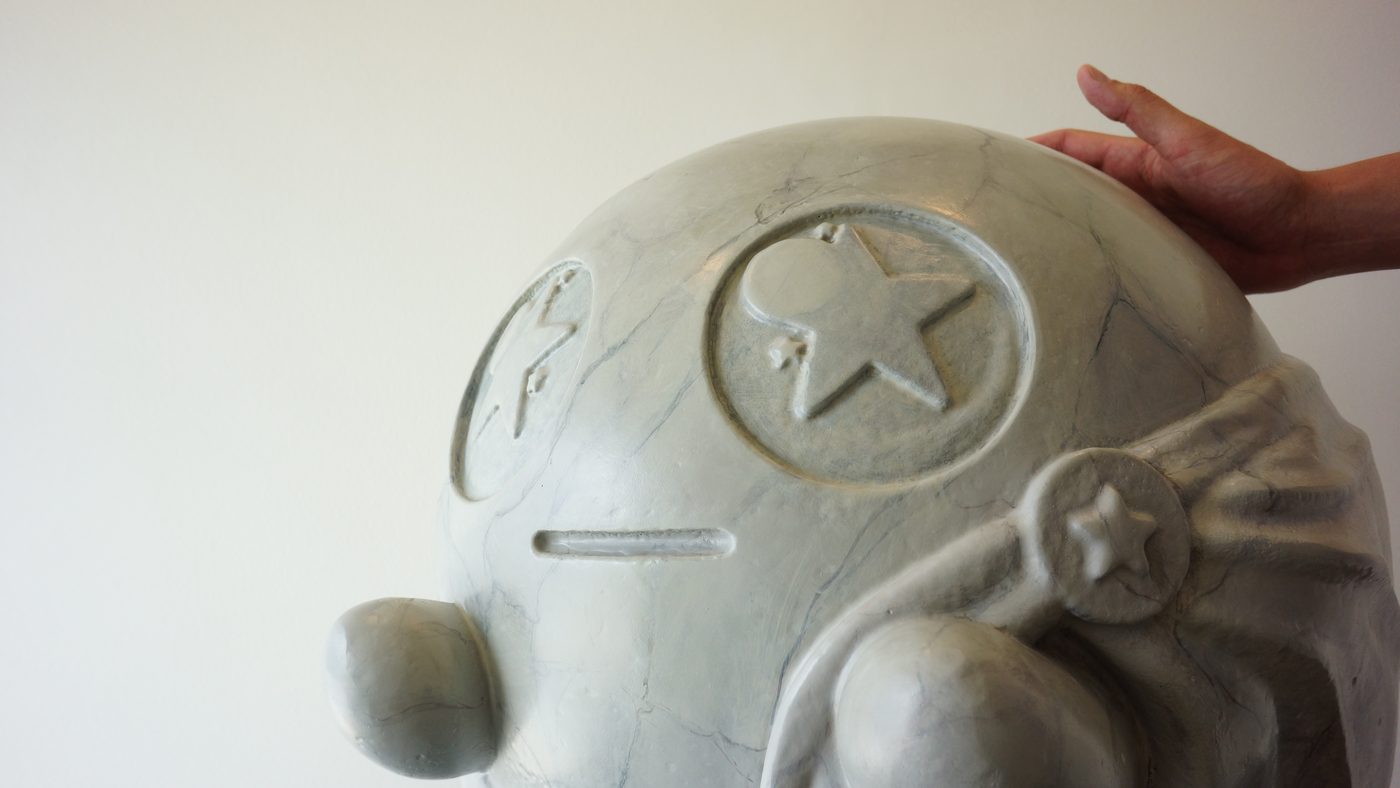
Three limits decide almost everything: what fits in the machine or on the mill, what fits in the vehicle and through the venue doors, and what people can safely carry. We fabricate pieces up to about 10–15 ft when assembled, so sectioning is not optional. Even our foam pieces follow this rule: large foam builds are made in sections, doweled and assembled, or shipped in pieces.
The question is where to cut. Good breakdown points follow the design: a natural change of surface, a panel line, a recess, an edge that will be hidden by an adjacent element. Bad ones fall across a face that must look continuous. We work this out in the design stage, before anything is printed or milled, because moving a break later means redoing parts. For more on how large pieces get made in the first place, see our post on large-scale 3D printing.
How do breakdown points and labeling work?
Each section gets a clear label, and the labels match the assembly instructions. Hardware, fasteners and small parts are kept with the sections they belong to. The goal is that someone who has never seen the piece can put it together correctly the first time, and take it apart again in the reverse order.
- Registration features (pins, dowels, keyed edges) so sections can only go together one way
- A small number of large sections rather than many small ones, where transport allows
- Access to fasteners from places that will not be visible when the piece is on display
- Lifting and handling points planned in, not improvised on site
What holds a big piece together inside?
Oversized pieces are engineered with internal armatures and hardware so the load path is defined, not left to the shell. The specifics depend on the piece: how tall it is, whether it stands free or mounts to a wall or base, whether it will be touched, and what surrounds it. We design each one for its use rather than applying a fixed formula, and we quote each project individually.
Free-standing tall pieces need a stable base and a plan for how they are secured at the venue. Wall or ceiling mounted pieces need mounting points that the venue actually permits, so it is worth telling us about rigging rules early. If your piece will hang or sit on an exhibit structure built by someone else, share their drawings.
How do you keep large pieces light enough to move?
Weight affects shipping, install safety and how much support the piece needs. Two material choices help. Foam is much lighter than solid materials and can be milled or sculpted in large volumes; our 5-axis CNC foam milling works in EPS and HDU urethane foam, and the surface is protected with a polyurea epoxy hard coat before finishing. For printed pieces, 3D printing lets us make thin-walled hollow shells with internal structure instead of solid bodies.
Which method suits your piece depends on shape, detail, schedule and how it will be used. We compare them in 3D printing vs. foam milling vs. hand sculpting.
| Decision | What we plan for | Why it matters |
|---|---|---|
| Section size | Fits the vehicle, venue doors and lift access | A piece that cannot get in the building is a failed piece |
| Break location | Along design lines, away from continuous faces | Keeps seams less visible after finishing |
| Internal structure | Armatures and hardware matched to the piece | Carries the load and keeps sections aligned |
| Weight | Foam, or hollow printed shells | Easier and safer to handle and ship |
| Finish | Durable clear coat on painted surfaces | Survives repeated setup and teardown |
| Packaging | Custom crates and foam-lined packaging | Protects delicate finishes such as plated parts |
How are seams joined and hidden?
Where a piece stays permanently assembled, seams are filled, sanded and painted so the surface reads as one. In general, that work is done after the sections are joined, so the finish is continuous across the join. For pieces that must come apart for shipping, we design the break where a seam is natural or where it can be finished as an intentional detail, and where possible put the final join-line finishing on site or plan for touch-up.
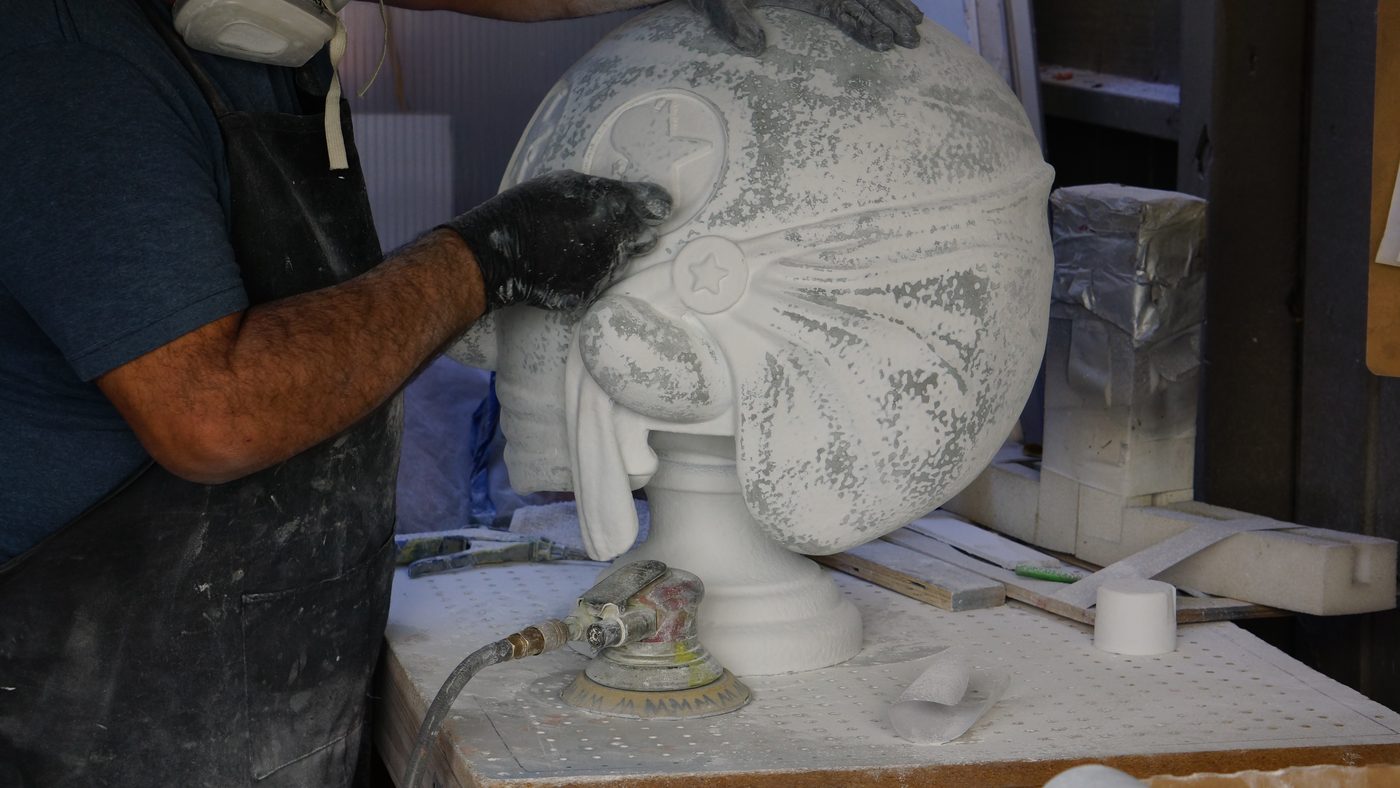
All parts are fully sanded before painting, which removes build lines, and painted parts are not released until fully dry and cured. Our painting and finishing service covers the surface work, and finishing is part of any order where we fabricate the piece. We do not finish customer-supplied parts.
Why test-fit the piece in the studio before it ships?
Before a piece is broken down for shipping, we assemble it in our studio and photograph it. Two things come out of this. You see the finished piece and approve it before it leaves. And we confirm that every joint aligns and every fastener is where the instructions say, so problems get found in Los Angeles, not in a venue on load-in day.
The photos also give whoever assembles the piece a reference for how it should look when it is right.
How are delicate finishes packed and shipped?
We build protective shipping crates sized to each piece, so nothing shifts in transit. Plated pieces, such as chrome or gold electroplated parts, get foam-lined custom packaging, because a scratch on a mirror finish is very visible. Pieces are packed efficiently: breakdown points chosen to make crates compact, and hardware packed with the components it belongs to.
We ship nationwide and internationally, and can arrange local pickup or same-day delivery in LA. Crates are sent to the venue, an exhibit warehouse or a booth contractor, depending on what the show requires.
Freight and venue coordination
Trade shows and large venues usually run their freight through a general services contractor with deadlines for advance warehouse delivery and direct-to-show delivery. We coordinate shipments around those deadlines. You will need to share the show kit or freight instructions from the organizer or contractor. Missing an advance-warehouse cutoff can mean a piece that arrives too late, so this belongs on the project timeline from the beginning. We recommend contacting us 6–8 weeks before a show for complex builds.
What happens on install day?
Each shipment includes assembly instructions, and we provide phone support during install. Pieces are designed to go together without a technical crew, so a couple of people following the instructions should be enough, though heavy sections still need enough people to lift them safely. When the show ends, the same steps run in reverse, the parts go back in the crate, and the piece is ready for the next event.
Will the finish survive multiple events?
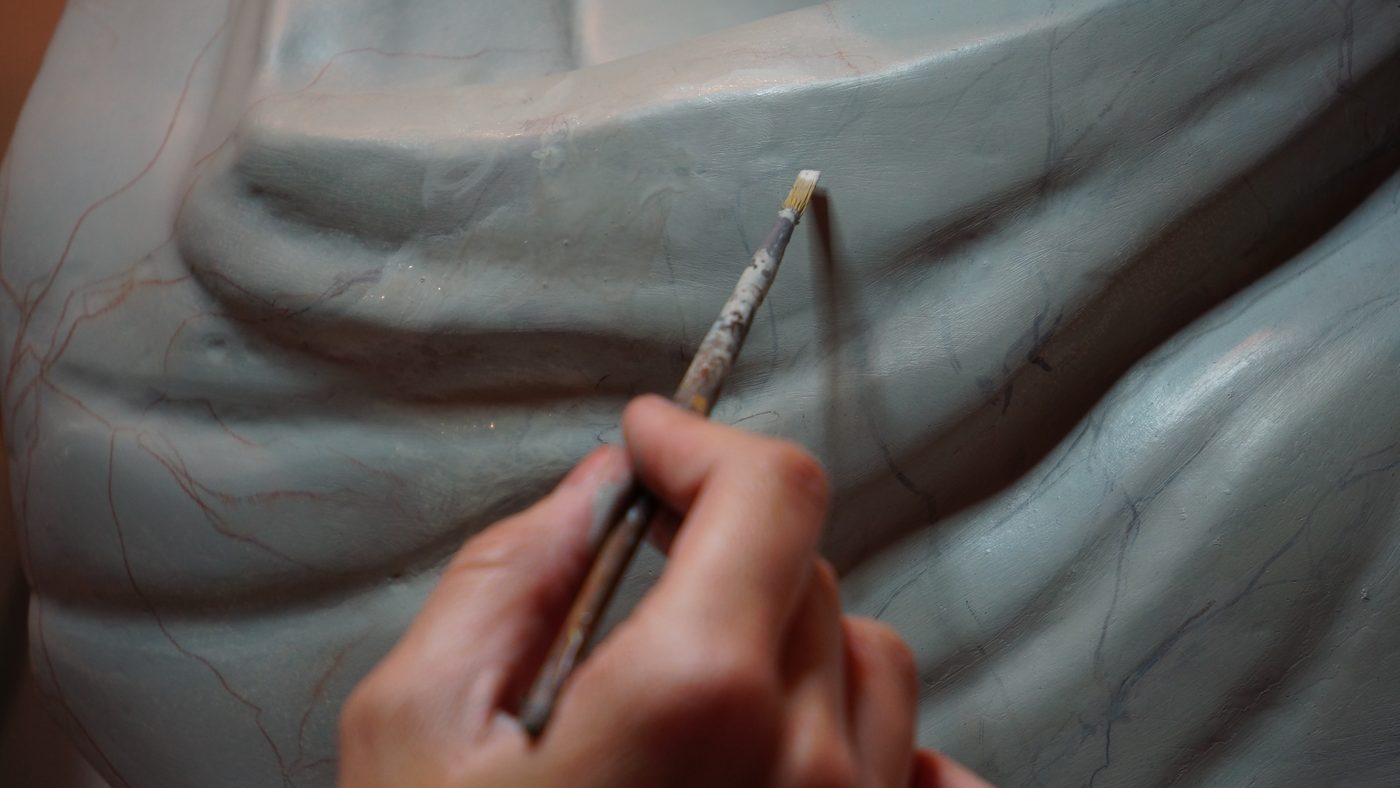
A piece that is set up and taken down repeatedly will pick up scuffs, so we use durable clear coats over painted finishes. Tell us up front how many events the piece will do, and whether it will be touched by the public, so we can plan the finish accordingly. Outdoor use is a separate question we would want to discuss for your specific piece rather than answer in general.
Pre-install checklist
Use this list with any fabricator. It also reflects what we ask you for.
- Confirm dimensions and weight of each crate and section against doors, elevators and dock access.
- Get the venue or general contractor’s freight deadlines and shipping labels in writing.
- Decide whether the piece ships to an advance warehouse or direct to the show.
- Confirm the floor, wall or stand it mounts to, and any rigging or load limits.
- Review the studio test-fit photos and approve before shipping.
- Make sure whoever installs has the assembly instructions and our phone number.
- Have tools listed in the instructions on hand, plus enough people for heavy lifts.
- Inspect crates on arrival and note any damage before signing.
- Plan where crates will be stored during the event, ready for teardown.
For a fuller picture of booth centerpiece planning, including timing, read our trade show booth centerpiece fabrication guide, and see our trade show display work and brand and marketing projects for examples. We focus on commercial projects, with no minimum quantity.
Tell us the piece, the venue and the load-in date, and we will engineer it to ship and assemble and quote it within 24–48 business hours.
Request a QuoteFrequently Asked Questions
How do you ship a large prop or display piece?
We design it as sections that fit protective crates sized to each piece, test-fit and photograph it in the studio, then pack sections and labeled hardware together. Crates go to the venue, an exhibit warehouse or a booth contractor, timed to the organizer's freight deadlines. We ship nationwide and internationally.
How are oversized pieces assembled on site?
Each shipment includes assembly instructions, labeled components and hardware, and we provide phone support on install day. Pieces are designed to go together without a technical crew. Heavy sections still need enough people to lift them safely, and the same steps run in reverse for teardown.
How big can a fabricated piece be?
We fabricate pieces up to about 10–15 ft when assembled, and oversized replicas at 2–15x actual size. Pieces that big are built in sections, with breakdown points planned in the design so they can be moved through doors and shipped in crates.
Can a piece be set up and taken down repeatedly?
Yes, that is a design requirement for many trade show and event pieces. We use durable clear coats over painted finishes and plan the breakdown so it is repeatable. Tell us how many events are planned and whether guests will touch the piece so we can plan the finish accordingly.
Are seams visible on large assembled pieces?
Seams are placed along natural design lines where possible. Where a piece is permanently assembled, joints are filled, sanded and painted so the surface reads as one. For pieces that come apart for shipping, the join is designed to be as unobtrusive as the design allows, and we can plan touch-up.
When should I contact you for a trade show piece?
For complex builds we recommend contacting us 6–8 weeks before the show. Rush production is possible at a premium. Bring the show's freight deadlines, whether shipping goes to an advance warehouse or direct to show, and any rigging limits, so we can engineer the sections and crates around them from the start.
Have a project in mind?
Hollywood 3D Printing designs, fabricates, and finishes custom pieces for brands, agencies, productions, and events, all under one roof in Los Angeles. Tell us what you’re building and when you need it.
Start Your Project TodayPrefer to talk it through? Call (323) 645-7640.
Related Reading