hold.that.thought. Blog
Silicone Mold Casting vs. 3D Printing: How to Make Multiples
By Hollywood 3D Printing ·
Key Takeaways
- Print every copy for small quantities, changing designs or plated parts; make a silicone mold when you need many identical parts or materials a printer cannot handle.
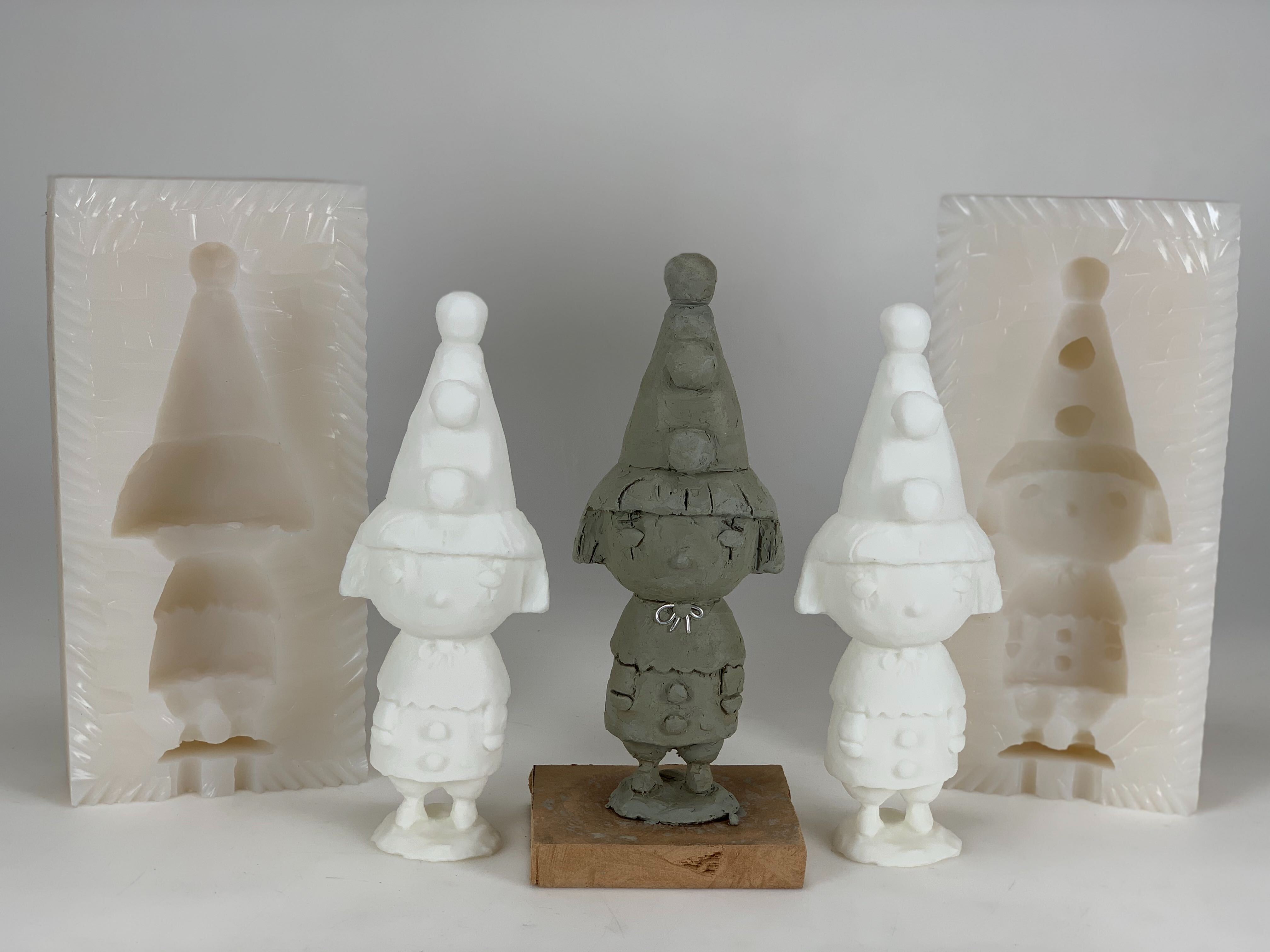
- Our molds start from a master we print in SLA resin, take about 2 weeks to deliver, and you receive both the mold and the master.
- A silicone mold typically yields 30 to 50 casts in hard resins, and more with softer materials like wax.
- One-piece dump molds need a flat bottom and no undercuts, while two-part molds handle complex shapes and statues.
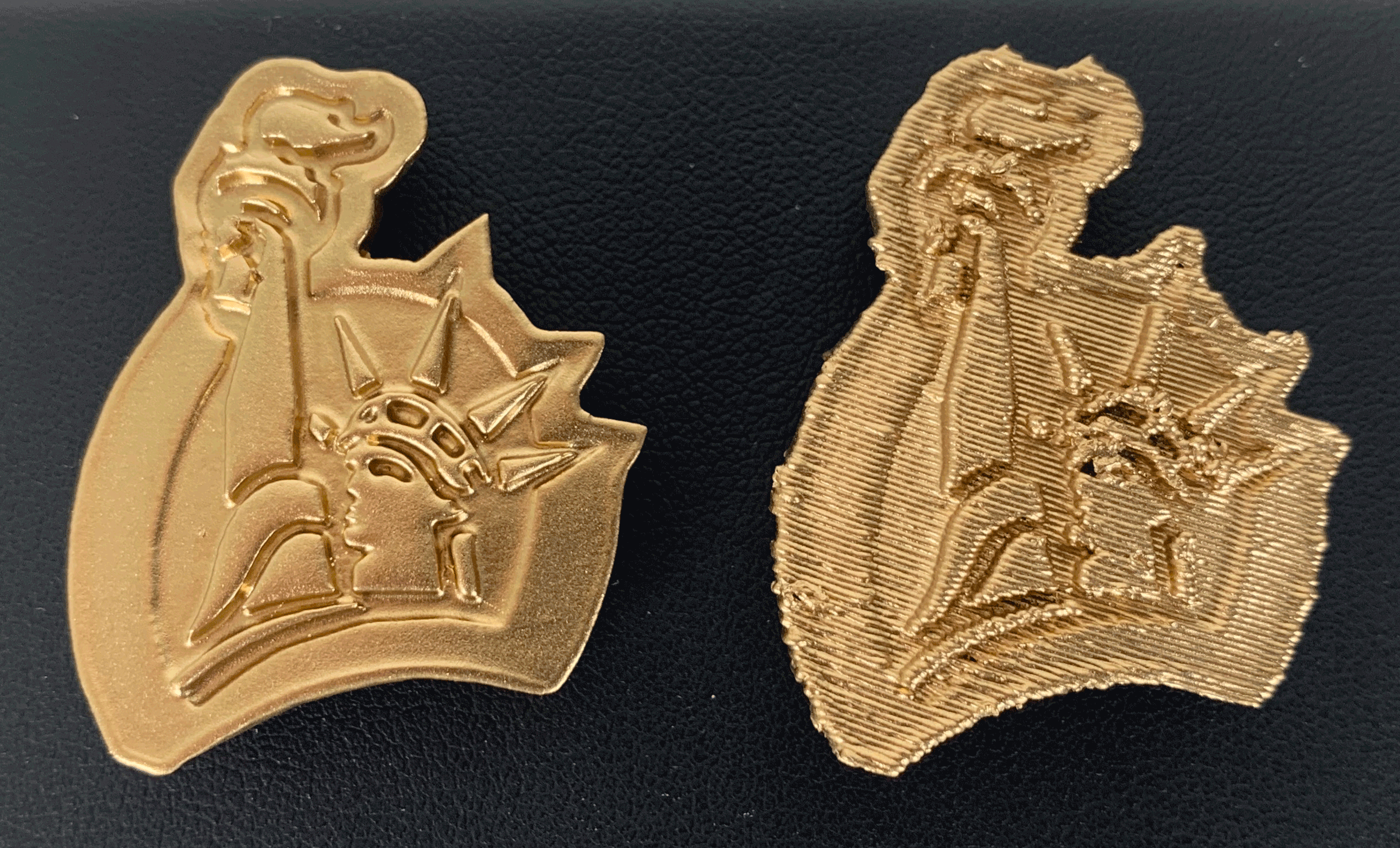
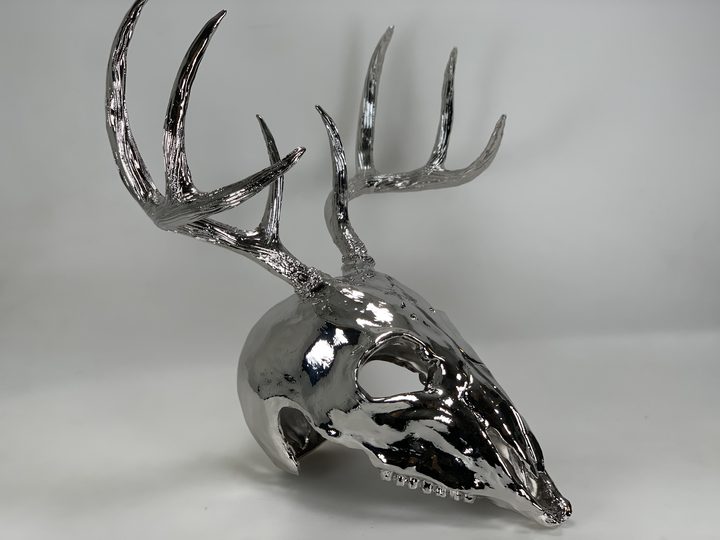
- Chrome and gold plating requires SLA resin sanded to 1000-grit, so cast parts are not automatically platable.
If you need a handful of identical parts, print every one. If you need dozens of the same part in a hard resin, or copies in materials we cannot print such as wax, plaster or concrete, make a silicone mold from a 3D-printed master and cast the rest. A single mold typically yields 30 to 50 casts in hard resins, and more with soft materials like wax. For very large runs, injection molding is a different answer, with very different tooling and lead times.
We do all of this in-house in Los Angeles: an SLA-printed master, a silicone mold, and the casting. Below is how to decide between the options, how our process works, and how to design a part so it molds cleanly.
When should you print every copy instead of making a mold?
Print every copy when the quantity is small, when each piece differs (names, serial numbers, variations), or when the design might still change. A printed part needs no tooling and no mold-making step, so a design revision only needs a new file. Individually printed pieces are also the only route to plating, because plating requires SLA resin sanded to 1000-grit.
Printing also suits parts too complex to mold. Internal channels, deep undercuts and lattices are natural for a printer and painful for a mold. Our 3D printing service covers SLA and FDM, and our post on SLA resin printing explains why SLA is the material for masters.
When does silicone mold casting make more sense?
Mold casting makes sense when you need many identical copies, when you want a material a printer cannot handle, or when you want to keep a durable master and pull copies as needed over time. Once the mold exists, each casting is quick, and each additional part gets quicker to make as the count rises.
- Quantity. Dozens of identical parts is where a mold starts to beat printing every copy on speed.
- Material. We cast urethane resin, epoxy, plaster, polyurethane foam, wax, soap and concrete. That covers things like candles, chocolates, soap bars and architectural pieces that no printer produces.
- Reorders. You receive both the mold and the master, so you can keep making copies from what you own.
- Consistency. Every casting comes from the same master, so the parts match.
How does our master-to-mold-to-cast process work?
Every mold starts with a master printed by us in SLA resin. We do not accept customer-supplied physical masters, because a printed master gives us a known, smooth, consistent surface to build the mold around. If you do not have a file, we can create one through our 3D design service, or scan an existing object first (see our 3D scanning service).
- Master. Your design is printed in SLA resin for a smooth, detailed surface.
- Mold. We build a mold box around the master and pour silicone. Delivery of the finished mold is about 2 weeks.
- Cast. We pour the casting material into the mold, let it cure and release the part.
- Deliver. You receive the mold and the master, plus any cast parts ordered.
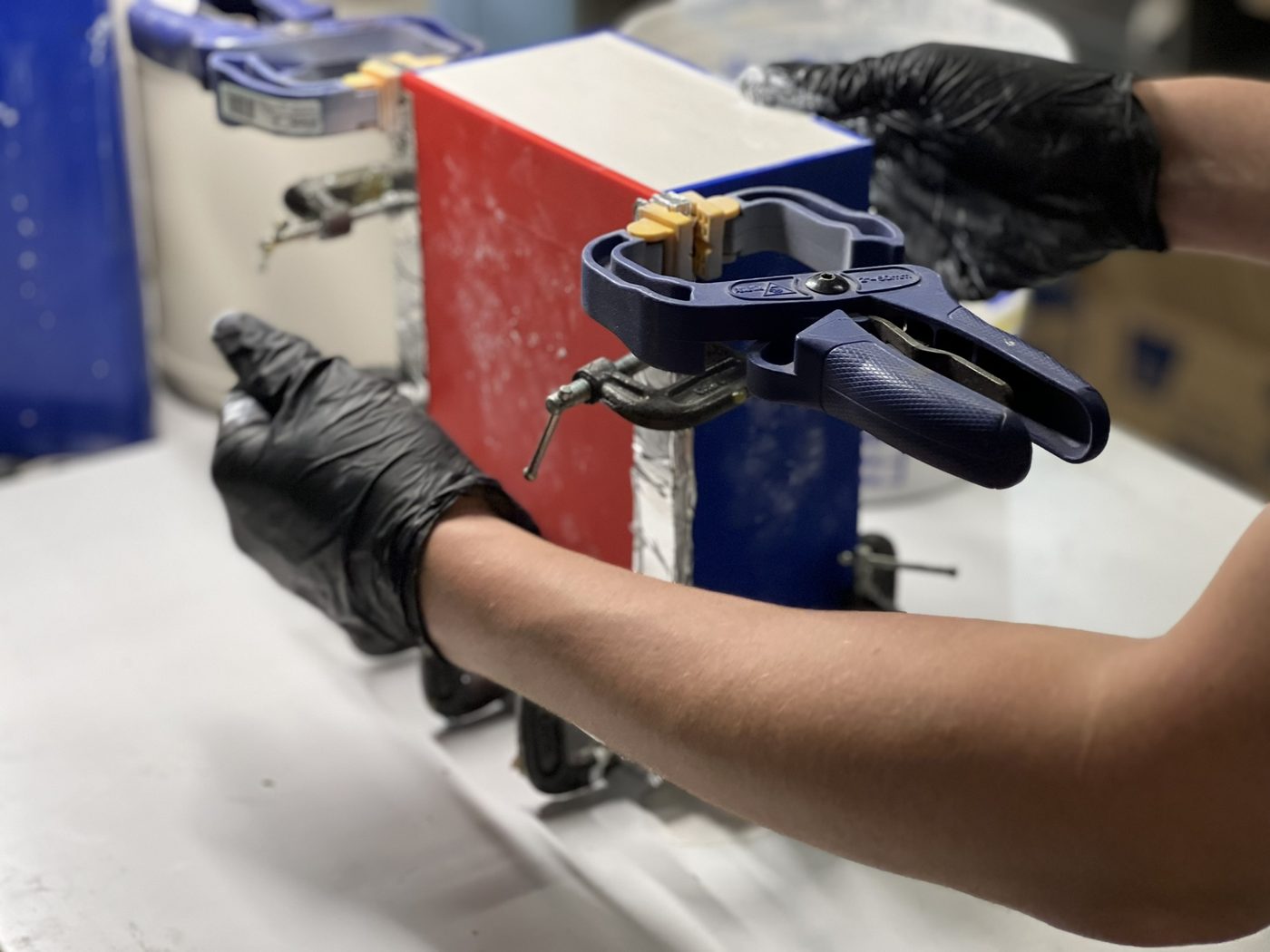
What is the difference between dump molds, two-part molds and tray molds?
| Mold type | Best for | Design requirements | Notes |
|---|---|---|---|
| One-piece dump mold | Simple shapes such as soap, candles and chocolate | Flat bottom, no undercuts | Material is poured in the open top and the part is peeled out |
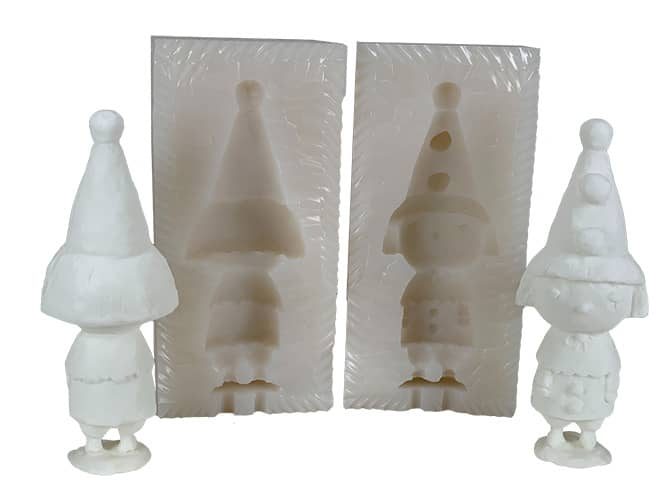
| Two-part mold | Complex shapes and statues | Needs a defined parting line where the halves meet | Handles undercuts and full 3D forms |
| Multi-cavity tray mold | Making many small identical parts per pour | Each cavity follows the same undercut and parting-line rules | Several cavities in one mold speed up production |
A one-piece mold is quicker to make and simpler to use, but the part must release straight out of the open face. A two-part mold splits the shape along a parting line, so it can capture full three-dimensional forms, and it is the usual choice for figures and busts. Tray molds put many cavities into one silicone block so each pour gives you a batch.
How many copies can you get from one silicone mold?
Typically 30 to 50 casts per mold in hard resins, and more with softer casting materials like wax. Those are typical figures, not guarantees: the real count depends on the part geometry, the material and how it is handled. If you need more than one mold’s life, a second mold from the same master is the fix, which is another reason you keep the master.
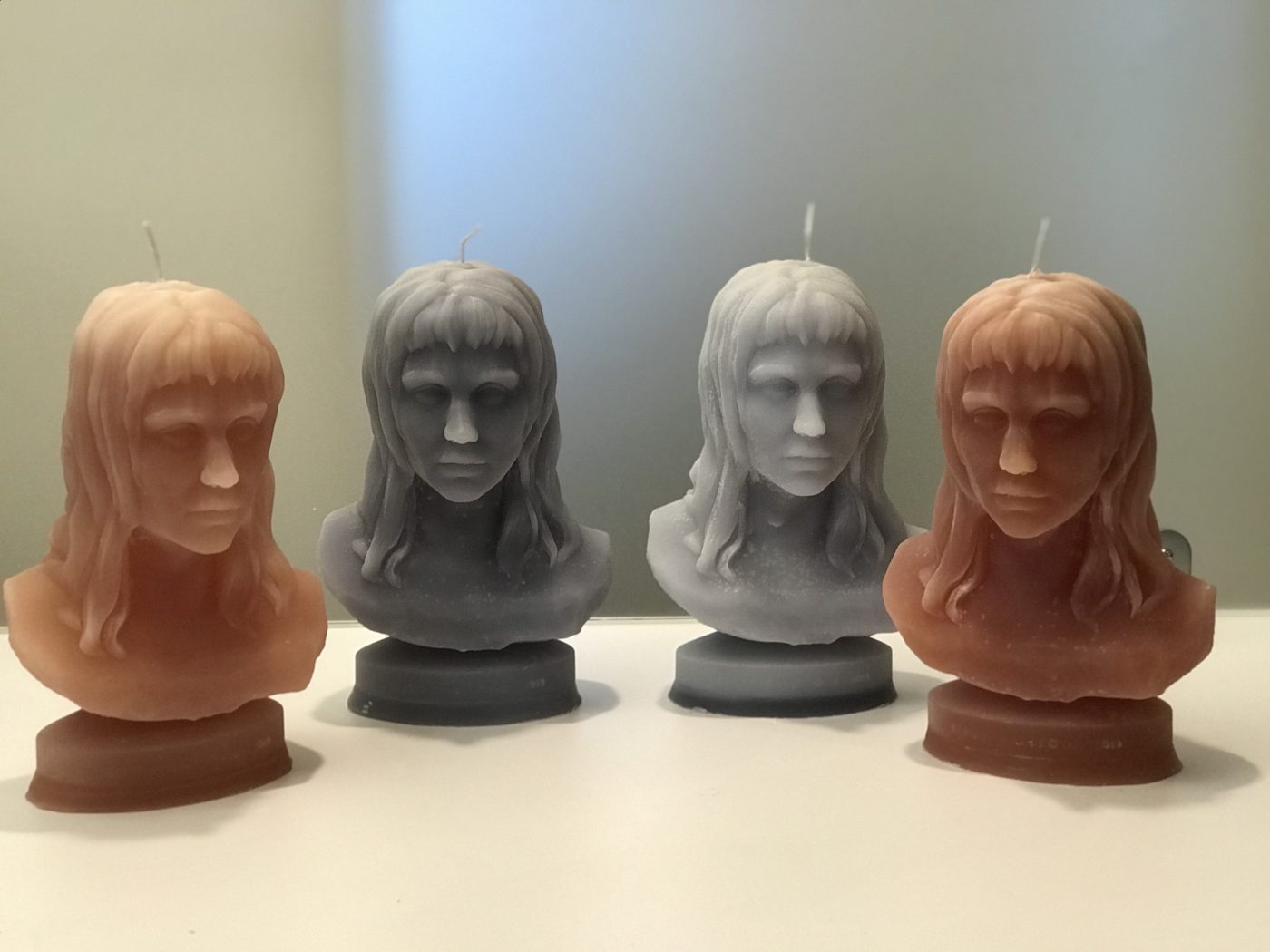
Which casting material should you choose?
The casting material follows the job. Urethane resin and epoxy make rigid parts and are what most prop, display and product-development copies are cast in. Polyurethane foam gives a lightweight cast. Plaster and concrete give a heavy, stone-like part for architectural and display uses. Wax and soap suit candles and bath products, and wax, as a soft material, allows more casts per mold.
Because each material behaves differently, tell us what the part has to do: sit on a shelf, be handled, go outdoors, or be lit. We will suggest a material and confirm the master and mold design suit it. Some uses, such as food-contact items like chocolate, deserve a specific conversation before anything is poured, so raise them at the start.
How do you design a part that will mold well?
Design choices made before printing decide whether a mold is simple or complicated. The general rules are the same for any silicone mold work.
- Undercuts. Anything that traps the part in a one-piece mold is an undercut. Avoid them for a dump mold, or switch to a two-part mold.
- Flat bottom. A dump mold needs a flat base so the master sits level and the part stands cleanly.
- Parting lines. On a two-part mold, decide where the seam will run and keep it away from your most visible detail.
- Wall thickness and fine features. Very thin or delicate features are more likely to tear in the mold or break on release, so keep them sturdy.
We review each master before we build a mold, and we will tell you if the shape needs a two-part mold or a small design change.
When is injection molding the right answer?
Injection molding uses hard metal tooling to make plastic parts in very high volumes, but the tooling itself takes a long time to build and a design change means changing the tool. It is generally the right answer once the design is final and the run is large enough to justify that tooling. That is not our sweet spot. Silicone casting and printing fit the small to medium runs before that point, and we often make the prototypes and pre-production samples that help a design get there.
For scale, our largest single order to date is 11,500 units. Tell us the quantity you expect and we will tell you honestly which route fits.
How do you finish cast parts?
Cast parts can be sanded, primed and painted like any other piece. Our painting and finishing service offers Pantone matching, airbrushing and hand painting, and our guide to painting 3D prints covers the color side.
Plating is a separate question
Our chrome and gold electroplating requires SLA resin sanded to 1000-grit, so cast parts are not automatically platable. If you need plated copies, print each one in SLA resin, or ask us before you plan a cast run.
For a broader look at copying an existing sculpture, see our post on reproducing sculptures with 3D scanning and silicone molds, and our silicone mold making service page for capabilities.
What should you send to get a quote?
Send the design file or reference images, the number of copies you need, the casting material you have in mind and your deadline. There is no minimum quantity. We focus on commercial and production projects and do not take hobbyist, personal or student work. We will recommend printing, molding or a mix and quote each project. Start with our quote form.
Send us your part and the quantity you need, and we will quote the print, mold and cast route that fits.
Request a QuoteFrequently Asked Questions
How many copies can I get from one silicone mold?
Typically 30 to 50 casts per mold in hard resins, and more with softer materials like wax. The exact number depends on the part shape, the casting material and handling. Because you receive both the mold and the master, you can have another mold made when the first one wears out.
Is silicone mold casting faster than 3D printing?
It depends on quantity. Printing needs no tooling, so it wins for a few parts. A mold takes time to make up front but makes each additional copy quicker, so it starts to win at dozens of identical parts. We can outline both routes so you can compare them for your project.
Can I send my own master to be molded?
No. We do not accept customer-supplied physical masters. The master must be 3D printed by us in SLA resin, from your file, a design we create or a scan of your object, so that the surface and dimensions are consistent for the mold.
What materials can you cast?
We cast urethane resin, epoxy, plaster, polyurethane foam, wax, soap and concrete. The material you need often decides between casting and printing, since a printer cannot make wax candles, soap bars or concrete pieces. Tell us the use and we will suggest one.
How long does it take to get a silicone mold made?
Delivery of the finished mold is about 2 weeks, counted from the start of mold making. You receive both the mold and the SLA master. Casting time depends on the material and quantity, and our quotes include lead time for the whole project.
Can cast parts be chrome or gold plated?
Not automatically. Our electroplating requires SLA resin parts sanded to 1000-grit. Cast copies can be painted with metallic finishes, but if you need real plated metal, ask us before planning the run so we can advise whether to print each piece instead.
Have a project in mind?
Hollywood 3D Printing designs, fabricates, and finishes custom pieces for brands, agencies, productions, and events, all under one roof in Los Angeles. Tell us what you’re building and when you need it.
Start Your Project TodayPrefer to talk it through? Call (323) 645-7640.
Related Reading